What is included in traffic signal installation and service?
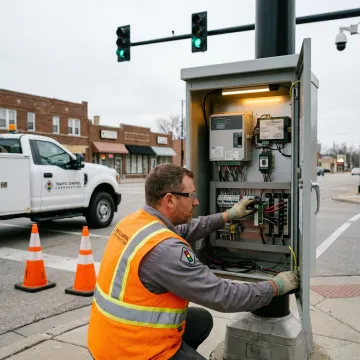
Traffic signal installation and service typically includes product selection assistance, cabinet and controller support, detection system setup, signal turn-on, troubleshooting, audits, and ongoing maintenance. Traffic Control Corporation supports agencies and contractors with field service, depot repair, ATMS upgrades, and training so signal systems are installed correctly and continue operating reliably.
Who does Traffic Control Corporation serve?
Traffic Control Corporation serves state and local transportation agencies, Departments of Transportation, municipal governments, county transportation departments, local contractors, and consulting service providers. The team supports projects ranging from individual intersection turn-ons to broader traffic management system upgrades across its Midwest service territory.
What happens during a traffic signal turn-on service?
A signal turn-on service verifies that controllers, cabinets, detection equipment, displays, phasing, safety monitoring, and communications are functioning as intended before an intersection becomes operational. Technicians help confirm proper sequencing, troubleshoot equipment issues, and support a safe activation process for newly installed or upgraded traffic signals.
How do traffic detection audits improve intersection performance?
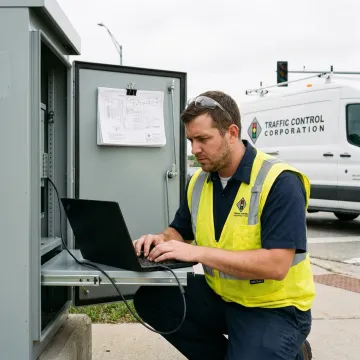
Detection audits review camera, radar, loop, or wireless detection performance to confirm vehicles are being tracked accurately. Technicians check detection zones, sensor alignment, lens condition, calibration, controller inputs, and system responsiveness. These audits help reduce missed calls, false detections, and timing inefficiencies at signalized intersections.
Why is annual MMU conflict monitor testing important?
MMU and conflict monitor testing verifies that safety monitoring equipment can detect unsafe signal indications, including conflicting greens. Annual testing and certification help agencies document compliance, identify failing units, and reduce the risk of unsafe field operation. Proper testing supports safer intersections and more reliable cabinet performance.
Can traffic signal hardware be repaired instead of replaced?
Hardware repair may include controller repair, video and detection system repair, controller board depot service, and conflict monitor testing. Traffic Control Corporation notes that warranty work is performed at the factory, while specialized support can help determine whether equipment should be repaired, certified, replaced, or returned through the proper channel.
What does ATMS installation and support involve?
ATMS support can include software deployment, health checks, maintenance, intersection hardware upgrades, monitoring tools, map and graphics support, alerts, reports, and scheduler guidance. These services help agencies manage connected intersections more efficiently, reduce system lag, and improve visibility across a corridor or regional traffic network.
What information should I prepare before requesting service?
To schedule support, gather the intersection location, cabinet type, controller model, detection equipment details, observed issue, project plans, and any applicable DOT specifications. Providing this information helps the service team recommend the right field support, repair path, training, audit, or product selection assistance for your project.