Introduction
A traffic signal's reliability rarely comes down to the parts drivers can see. It comes down to what's inside the cabinet, and few components matter more than the load switch.
Many technicians can identify a bad bulb or a stuck detector, but few can explain what a load switch does. That gap leads to misdiagnosed malfunctions, wrong replacement parts, and intersections stuck in flash mode longer than necessary.
That risk scales quickly. The Federal Highway Administration notes that a typical cabinet houses at least 12 load switches, with larger, more complex intersections requiring even more (FHWA Traffic Signal Program Handbook).
This article breaks down what these devices do, how they function inside NEMA TS1/TS2 cabinets, common failure points, and how to source reliable replacements.
Key Takeaways
- Load switches turn low-voltage controller signals into mains power for red, yellow, and green lights
- They also relay voltage data to the conflict monitor, flagging unsafe signal combinations
- LED retrofits need switches matched to lower wattage loads to prevent nuisance flashing
- Certified, application-matched units from TCC minimize cabinet downtime and safety risks
What Is a Traffic Signal Load Switch?
A traffic signal load switch is a solid-state relay-type device that takes a low-voltage command signal from the traffic controller and switches standard AC mains power to the signal head. Under NEMA TS1, that command logic is simple: an input of 0-6V tells the switch to conduct power, while anything above 16V shuts it off.
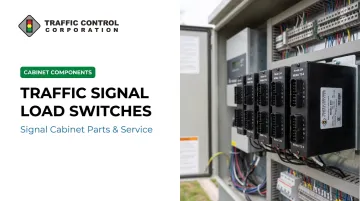
Each load switch typically handles three circuits, commonly labeled A, B, and C, corresponding to one signal indication per approach. A single cabinet may house a dozen or more units, all plugged into standardized sockets on the back panel.
Physical placement matters for troubleshooting. Load switches sit alongside the flasher and other field terminal devices, following NEMA TS1/TS2 socket conventions, including the standard 12-pin connector used in TS1-style cabinets.
Types of Traffic Signal Load Switches
Not every load switch does the same job. The main distinctions technicians should know:
- Standard 3-position switches: control red, yellow, and green for a single approach
- Flash transfer relays: separate electromechanical devices that reroute field outputs to the flash circuit during power irregularities or fault conditions
- Pedestrian, beacon, and ramp metering variants: application-specific units built for signal types outside standard vehicle heads
Solid-state designs have dominated the market since NEMA TS1-1989 first required them, replacing older electromechanical relay switches. The reason is straightforward: solid-state units switch cleanly at voltage/current zero-crossing points, reducing contact wear and electrical noise that plagued mechanical relays.
How Traffic Signal Load Switches Work
The signal flow inside a cabinet follows a consistent path. The controller processes timing and phase logic, then sends a low-voltage command to the correct load switch channel. That switch energizes the mains circuit, lighting the appropriate red, yellow, or green indication.
This isolation protects sensitive controller electronics from high-voltage field wiring, a critical safety function beyond basic power switching. NEMA TS1 requires at least 2,000 VDC of input-to-output isolation and limits off-state leakage current, protecting low-voltage logic circuits from field-side surges (NEMA TS1-1989).
Feeding the Conflict Monitor
Load switch outputs don't just go to the signal head. The conflict monitor (called a Malfunction Management Unit, or MMU, under TS2) watches those same field terminals, checking that only permitted signal combinations are energized. If two conflicting greens appear active at once, the monitor forces the intersection into flash as a fail-safe.
A few technical benchmarks matter here:
- 10A RMS is the typical continuous current rating per circuit under NEMA TS1
- Turn-on and turn-off must happen within 5 electrical degrees of the voltage or current zero-crossing point
- Thermal management matters because these units run continuously, outdoors, often in an enclosed cabinet with limited airflow
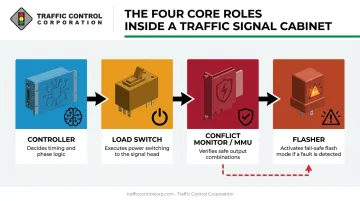
The full system breaks down into four roles: the controller decides what should happen, the load switch executes the power switching, the conflict monitor verifies it's safe, and the flasher stands ready if something goes wrong. Every wire on the back panel ties these pieces together.
Load Switches vs. Other Cabinet Components
Confusion often starts with terminology. A high side switch is a low-voltage semiconductor component common in electronics, switching power from the positive supply side of a circuit. A traffic load switch is a different animal entirely — it switches full mains AC voltage to a signal head, not a few volts of logic-level current.
No single device "controls" a traffic light. Each component plays a distinct role:
| Component | Role |
|---|---|
| Controller | Determines timing, phase sequencing, and coordination logic |
| Load switch | Executes power switching to the signal indication |
| Conflict monitor / MMU | Supervises outputs and forces flash on a fault |
| Flasher & transfer relay | Provides and routes flashing power when needed |
How those roles get wired matters just as much when it's time to replace a switch. NEMA TS1 and TS2 cabinets connect load switches differently:
- TS1: Uses point-to-point hardwiring directly between the controller and load switches
- TS2 Type 1: Relies on serial communication (SDLC) through a Bus Interface Unit, reducing wiring but changing how a technician diagnoses a suspected fault
Know which standard your cabinet follows before ordering a replacement switch.
Common Load Switch Problems and Maintenance Tips
Load switches fail in a handful of predictable ways. On older electromechanical units, contacts can stick or weld shut. On solid-state units, internal components degrade gradually from heat and moisture exposure common in outdoor cabinets.
LED retrofits introduce a specific compatibility problem. LED signal modules draw far less current than the incandescent bulbs load switches were originally designed around, according to manufacturer documentation from EDI Traffic.
That lower load can allow leakage current through the switch to read as "active" even when the circuit should be off. The conflict monitor sees this as a dual indication or conflict fault and forces the intersection into flash mode unnecessarily.
Field Troubleshooting Steps
When a load switch is suspected as the culprit, technicians typically:
- Swap in a known-good spare — the fastest way to confirm or rule out the load switch
- Use cabinet manual test switches to isolate individual circuits without affecting live traffic
- Check amperage draw against rated specs: readings well outside the expected range point to a failing unit or a load mismatch
A November 2020 maintenance synthesis prepared for MnDOT lists replacing burned-out load switches and confirming they're properly seated as standard preventive maintenance tasks (MnDOT Preventive Maintenance and Inspection for Traffic Signals). No industry source publishes a fixed service-life number for load switches, which is exactly why periodic testing, not a calendar date, should guide replacement.
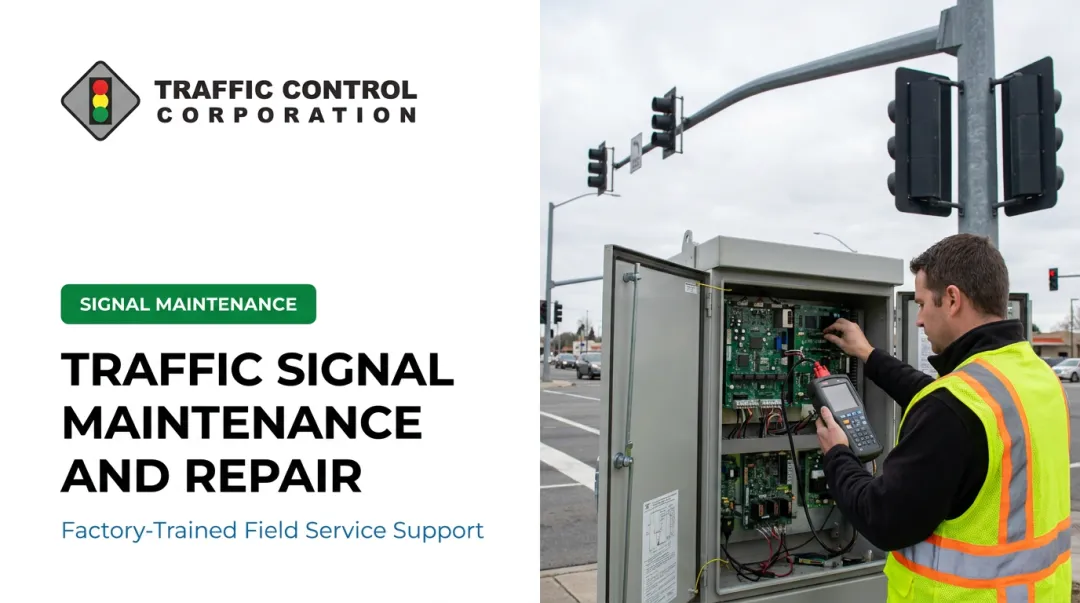
Diagnosing these faults correctly often requires experienced hands, particularly during LED conversion projects. TCC's factory-trained field service technicians assist agencies with onsite troubleshooting, walking through the controller, monitor, and load switches to isolate whether a fault is hardware, wiring, or a compatibility mismatch.
Choosing a Reliable Load Switch Supplier
Sourcing the wrong load switch causes more problems than it solves. A unit that's physically compatible with one cabinet standard may not be electrically correct for another. Getting this wrong can mean:
- Nuisance flash events after installation
- Failed conflict monitor certification
- Wasted truck rolls to swap out an incompatible part
Certification to the agency's specific cabinet standard, whether NEMA TS1, TS2, or ATC, isn't optional. It's the difference between a clean install and a callback, and it's why the right supplier matters as much as the part itself.
Traffic Control Corporation has distributed traffic signal equipment across the Midwest for over 75 years, representing more than 40 manufacturers including Econolite, Reno A&E, and GE Current. That range gives agencies access to both standard 3-position load switches and application-specific variants for pedestrian heads, beacons, or ramp metering.
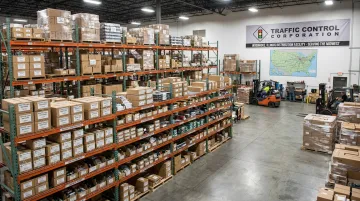
TCC maintains a multi-million dollar inventory at its Woodridge, Illinois facility, backed by regional offices in Indiana, Missouri, Minnesota, and Iowa. Together, they cover an 11-state service area, giving agencies and contractors faster access to replacement parts and hands-on product selection support when a legacy cabinet limits what will actually fit.
Frequently Asked Questions
What does a load switch do in a traffic cabinet?
It converts the controller's low-voltage command signal into line-voltage power, lighting the correct red, yellow, or green indication for a given approach. Each switch typically manages three circuits.
Is there a device that can control traffic lights?
Not a single one. The controller handles timing and phase logic, the load switch executes the power switching, and the conflict monitor verifies the outputs are safe before allowing them to stay active.
What is the difference between a high side switch and a load switch?
A high side switch is a low-voltage semiconductor component typically used in electronics to switch power from the positive supply side. A traffic load switch handles full AC line voltage to power a signal head.
How many load switches are typically found in a traffic signal cabinet?
The count depends on the number of vehicle phases, pedestrian phases, and overlaps at the intersection. FHWA notes most cabinets contain at least 12 load switches, with more complex intersections needing additional units.
Can a faulty load switch cause a traffic signal to go into flash mode?
Yes, if the failure creates a conflicting output, a dual indication, or a missing red signal, the conflict monitor detects the fault and forces the intersection into flash as a safety measure.
How long do traffic signal load switches typically last before needing replacement?
No standardized industry lifespan figure exists, since field life depends heavily on heat, moisture exposure, and load type. Routine testing during cabinet maintenance, rather than a fixed calendar interval, is the recommended approach.