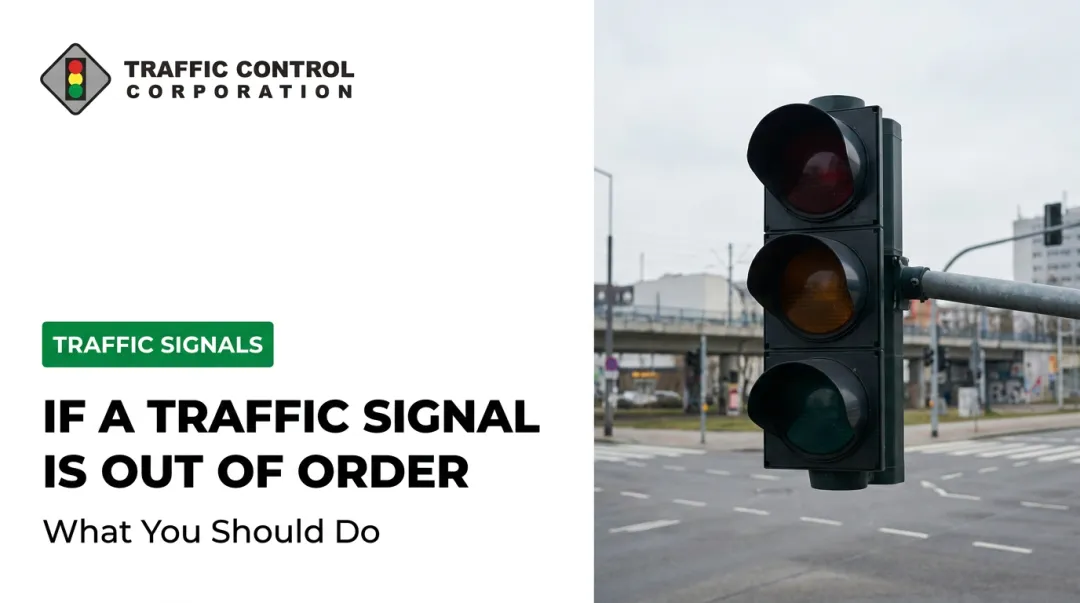
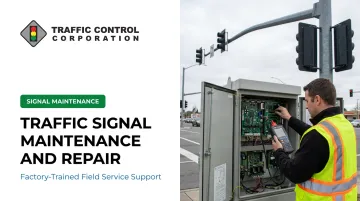
Neglected signals carry real consequences. Malfunctioning intersections raise crash risk, expose agencies to liability claims, and turn routine repairs into costly emergency callouts. A single stuck detector or failed conflict monitor can shut down an intersection for hours, backing up traffic across an entire corridor.
This guide covers why traffic signal maintenance matters, the four main types of maintenance agencies rely on, early warning signs that a signal needs attention, and a general inspection schedule for keeping intersections running safely.
Key Takeaways
- Consistent maintenance reduces malfunction-related crashes and limits agency liability exposure
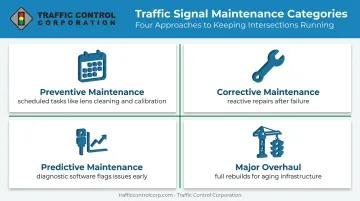
- Agencies typically use four maintenance types: preventive, corrective, predictive, and major overhaul
- Flickering lights, timing errors, and detection failures signal that service is overdue
- Structured daily-to-annual inspection schedules catch problems before they become outages
- Partnering with a regional parts distributor and field technicians shortens repair downtime
Why Traffic Signal Maintenance and Repair Matter
Signalized intersections carry a disproportionate share of risk. FHWA reports that signalized intersections account for roughly one-third of all intersection fatalities nationwide. Maintenance quality doesn't just affect uptime, it affects how safely conflicting movements clear an intersection.
Timing plays a bigger role than most people realize. A 1985 Transportation Research Board study of 91 signalized intersections found that crash experience varied directly with how clearance intervals, the yellow phase plus all-red time, were timed. Poor timing functions as a measurable safety risk backed by decades of crash data.
Liability Follows Neglect
Agencies that fail to repair known signal defects can be held liable. In Arizona State Highway Department v. Bechtold, a signal displayed green to conflicting approaches after an inadequate repair earlier that same day.
The state had prior notice through earlier crashes at that intersection. The Arizona Supreme Court affirmed the jury verdict, ruling that agencies must keep signals reasonably safe once they have notice of a problem.
That case isn't an outlier. Courts in other states have reached similar conclusions when defects go unaddressed after notice, though the exact standard varies by jurisdiction and immunity statute. The pattern holds across cases: once an agency has notice of a defect, inadequate repair creates real liability exposure.
The Cost Gap Between Preventive and Reactive Work
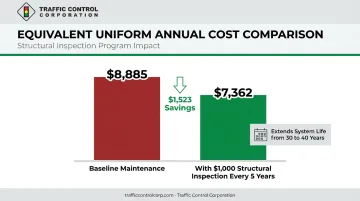
Reactive maintenance costs more than agencies often expect. In an FHWA-published Minnesota DOT life-cycle model, baseline maintenance runs an equivalent uniform annual cost of $8,885 per signal.
Adding a $1,000 structural inspection every five years extends the assumed system life from 30 to 40 years and lowers that annual cost by $1,523. Modest, scheduled inspection spending stretches equipment life and shrinks long-run costs.
Neglected components fail faster too:
- Skipping filter checks leads to cabinet overheating during summer peaks
- Skipping conflict monitor bench tests risks silent failures
- Ignoring small issues compounds into full intersection rebuilds years ahead of schedule
There's a public trust angle here as well. Drivers notice when a signal near their neighborhood sits stuck on flash for a week, or when the same intersection generates repeat complaints. Reliable signal operation shapes how residents judge whether their local agency manages infrastructure well.
Types of Traffic Signal Maintenance
Most agencies don't rely on one approach. Signal age, traffic volume, and available budget usually dictate a mix of four categories.
Preventive Maintenance
Preventive maintenance runs on a fixed schedule regardless of whether anything looks broken. Typical tasks include:
- Cleaning signal lenses and replacing bulbs or LED modules
- Testing pedestrian phases and push-button functionality
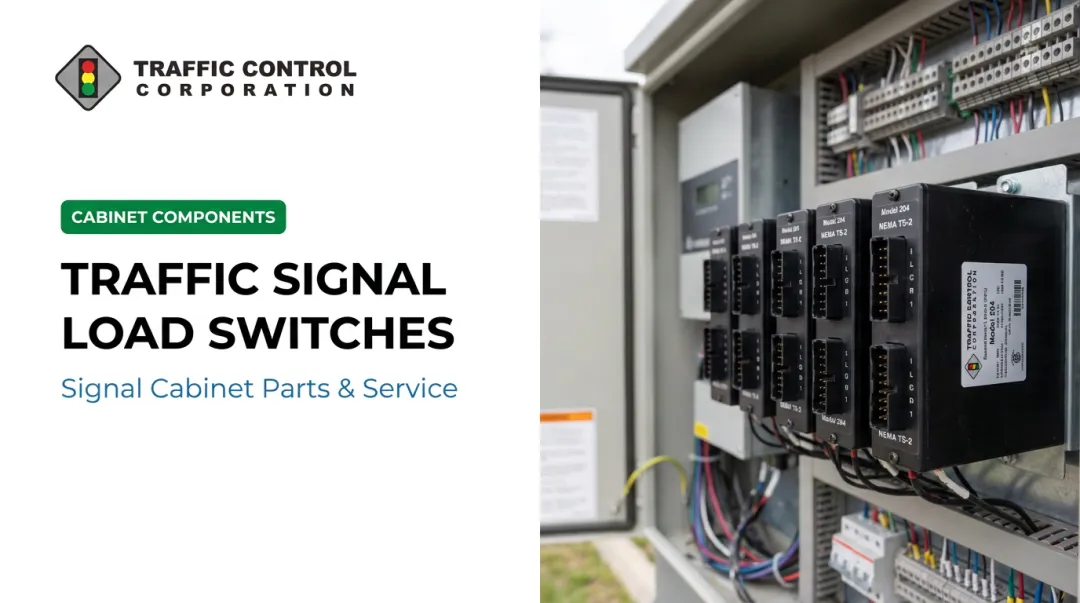
- Inspecting wiring, backpanel connections, and load switches
- Calibrating detection zones and checking loop sensitivity
- Verifying conflict monitors and malfunction management units against NEMA fault-detection standards
This is the workhorse approach for signals in good condition, and it's the category most directly tied to controlling long-term costs. TCC's conflict monitor testing and certification service, for example, bench-tests MMU and CMU units against NEMA standards and issues a documented certification record, giving agencies both operational assurance and a paper trail for liability documentation.
Corrective / Reactive Maintenance
Corrective maintenance kicks in after something has already gone wrong: a flashing signal, a citizen complaint, a dark intersection. Leaning too heavily on this approach carries real risk, including higher repair costs, extended downtime while parts get sourced, and safety exposure during the outage window itself.
Quick access to replacement parts matters here more than almost anywhere else. TCC maintains a multi-million dollar parts inventory at its Woodridge, Illinois facility, backed by factory-trained field technicians across its eleven-state Midwest territory. Agencies aren't waiting days for a load switch or MMU plug-in during an urgent repair.
Predictive / Condition-Based Maintenance
Predictive maintenance uses diagnostic software and remote monitoring to flag failing components before they cause an outage. Utah DOT reviews high-resolution controller data and phase-termination reports daily, catching stuck detector loops and video-detection faults before drivers ever call in a complaint.
This approach depends on smart controllers and monitoring platforms:
- Econolite's Centracs® ATMS and EOS software give agencies network-wide visibility into intersection health
- Applied Information's Glance® platform remotely monitors power, lamp status, and battery voltage on beacons and RRFBs, pushing real-time alerts instead of waiting for a scheduled visit
- Alpha Technologies' Remote Battery Monitoring System flags degrading backup batteries before they fail during an outage
The tradeoff is upfront investment in smart controllers or monitoring hardware, but it reduces unplanned outages considerably.
Major / Overhaul Maintenance
Some problems can't be solved with routine maintenance funds. Aging poles, obsolete controllers, deteriorated span wire, and end-of-life cabinets eventually require a full rebuild rather than a repair.
These projects typically draw from capital budgets rather than operating maintenance lines, since scope and cost run far higher than any single inspection cycle. Agencies planning an overhaul often need product selection consulting to match new equipment against legacy cabinet types and intersection geometry before a bid goes out.
How to Tell If a Traffic Signal Needs Maintenance
Catching problems early keeps a minor fix from becoming an emergency callout. Here's what maintenance crews and agencies should watch for.
Performance and Timing Issues
- Inconsistent signal timing or delayed phase changes
- A signal stuck on one color longer than its programmed interval
- Detection failures that cause the signal to skip a vehicle or pedestrian phase entirely
Repeated max-outs during light traffic often point to a detector stuck in the "on" position, a pattern automated diagnostic reviews are specifically built to catch before it shows up as a driver complaint.
Visible Damage or Error Indicators
- Physical damage to poles, mast arms, or signal heads from weather or vehicle collisions
- Flickering, dim, or burnt-out LED modules
- Controller error codes or cabinet alerts that keep recurring
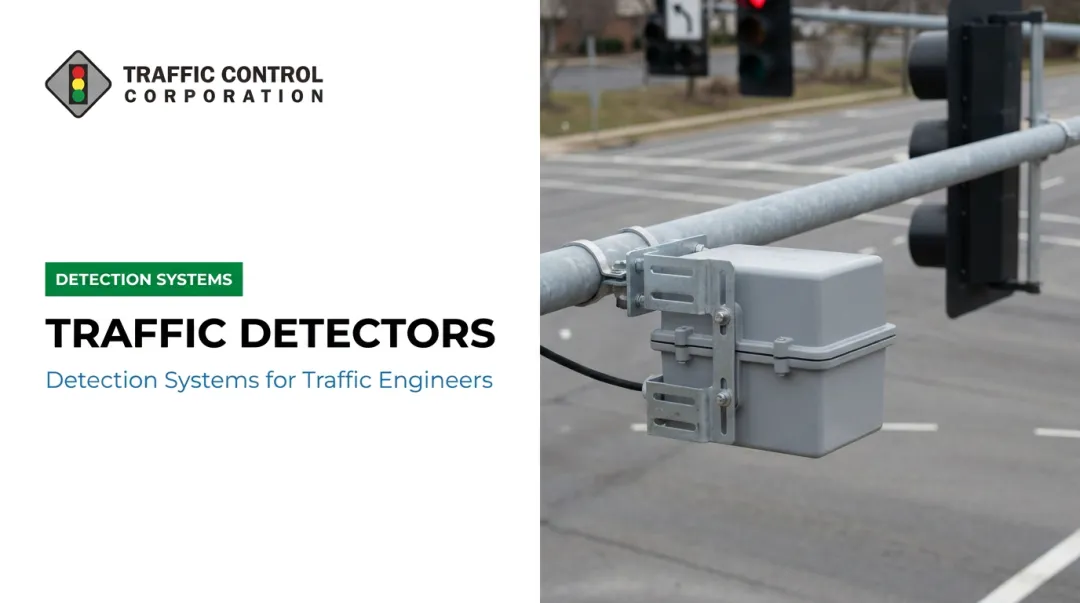
Detection equipment fails quietly too. Drifting video zones, misaligned radar units, and dirty camera optics rarely trigger an alarm. They just gradually reduce how well the intersection reads traffic.
TCC's Detection Systems Audit & Health Check service exists specifically to catch this kind of silent degradation, whether the equipment in question is video, radar, or inductive loop detection.
Recurring Failures or Complaints
- Repeated service tickets or citizen complaints tied to the same intersection
- Frequent controller resets or "temporary" fixes that stop holding after a few days
- Multiple technician visits addressing the identical fault without a lasting resolution
A signal that keeps needing the same quick fix is masking a deeper problem. It could be a failing load switch, a cabinet power supply nearing end of life, or wiring degraded past the point a patch can solve. When the same ticket keeps coming back, it's usually time for a full cabinet audit instead of another spot repair.
Traffic Signal Maintenance Schedule (General Guidelines)
Exact frequency depends on traffic volume, signal age, and local agency policy, but most maintenance programs follow a similar cadence.
| Frequency | Typical Tasks |
|---|---|
| Daily/Weekly | Visual checks for lens cleanliness, physical damage, normal signal operation |
| Monthly | Bulb/LED inspection, phase testing, mounting hardware checks |
| Quarterly | Sensor calibration, wiring inspection, cabinet cleaning |
| Annual | Conflict monitor/MMU testing, firmware updates, full safety review, structural inspection |
High-volume intersections and older equipment need more frequent attention than newer, low-traffic installations. A cabinet running 40,000 vehicles a day wears differently than one on a quiet collector street, and the schedule should reflect that.
Severe weather adds an extra trigger. Agencies typically schedule a post-storm inspection after high winds, ice, or flooding, regardless of where that intersection sits in the normal cycle. A signal that looked fine last week can have a cracked pole base or waterlogged cabinet within hours of a storm passing through.
These inspections also depend on the right products:
- Cabinet filters and thermostats support the thermal checks built into quarterly reviews
- Battery heater mats cut battery heating costs by roughly 30% in cold climates, keeping backup power reliable through winter
- Loop sealant, such as Chemque's Q-Seal 290S, protects saw-cut detector loops from moisture intrusion between annual inspections
Conclusion
Traffic signal maintenance is a safety obligation and a liability safeguard that also protects an agency's budget. It works through four complementary approaches:
- Preventive work catches small problems early
- Corrective repairs handle inevitable failures
- Predictive monitoring flags issues before they escalate
- Major overhauls address equipment that's reached the end of its service life
Traffic Control Corporation has supported Midwest transportation agencies and contractors since 1946, distributing genuine replacement parts, running onsite troubleshooting, and training crews on the equipment they maintain every day.
With a multi-million dollar inventory in Woodridge, Illinois and factory-trained technicians across an eleven-state territory, TCC gives agencies a regional resource for the parts and expertise a solid maintenance program depends on.
Frequently Asked Questions
What is traffic signal maintenance?
Traffic signal maintenance is the routine inspection, testing, repair, and replacement of signal components, controllers, detection systems, and wiring. The goal is keeping intersections operating safely and efficiently over their service life.
How much does it cost to replace a traffic signal?
Costs vary widely by region, intersection complexity, and equipment specified. Many agencies budget an ongoing annual maintenance allocation tied to installation cost rather than absorbing a full replacement expense all at once.
How often should traffic signals be inspected?
Most agencies run at least one comprehensive annual inspection, paired with more frequent visual checks on a weekly or monthly basis. Post-storm inspections are also standard after severe weather events.
Who is responsible for maintaining traffic signals?
Responsibility typically falls to the state DOT, a municipal or county agency, or a contracted maintenance provider, depending on jurisdiction. Many states formalize this through maintaining-agency agreements that define exactly who handles which signals.
What is the average lifespan of a traffic signal system?
Individual components vary: LED indications generally last around 10 years, electronics around 15, and a complete signal system 30 years or more with periodic structural inspections. Age alone shouldn't drive replacement decisions.
What happens if a traffic signal isn't properly maintained?
Neglected signals raise crash risk from timing errors and undetected malfunctions, exposing agencies to liability when defects go unaddressed after notice. Deferred maintenance also drives up long-term repair costs by shortening component lifespan.