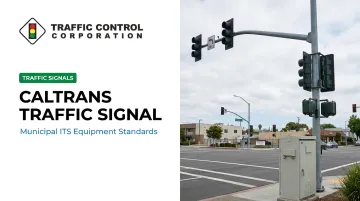
That's a lot of paperwork standing between a spec sheet and a working intersection.
Engineers, contractors, and agency staff often burn hours hunting through dense Caltrans manuals for a straight answer on controller requirements, approved equipment, or cable specs. The information exists, but it's scattered across the California MUTCD, Standard Specifications, Standard Plans, and a handful of authorization criteria documents.
This guide pulls those pieces together. We'll cover the regulatory framework governing Caltrans signal work, controller specifications, core equipment categories, and cable requirements, all in plain language you can actually use on your next project.
Key Takeaways
- Caltrans signal work follows a three-layer framework: MUTCD, Standard Specifications, and Standard Plans
- Only products on the Authorized Materials List qualify, though listing alone doesn't guarantee final acceptance
- Controllers must match the cabinet's NEMA TS2 or ATC/2070 architecture, communication, and battery backup needs
- Cable and electrical materials need certificates of compliance and must meet Buy America rules
Understanding Caltrans Traffic Signal Standards and the Regulatory Framework
Caltrans signal projects run on three interlocking documents, and knowing how they interact matters more than memorizing any single one.
- California MUTCD – Part 4 covers highway traffic signals, pedestrian and bicycle signal faces, beacons, and emergency-vehicle signal control. The 2026 Edition takes effect January 18, 2026.
- Standard Specifications – Division 10 splits electrical work into Section 86 (equipment and materials) and Section 87 (installation, testing, and acceptance).
- Standard Plans – Standardized drawings for signal heads, poles, foundations, and detection layouts that contract plans reference and supplement.
Here's the rule that resolves most disputes: if a discrepancy exists between the contract plans/specifications and the California MUTCD, the plans and specifications govern. Translation: don't lean on the MUTCD alone if your contract package says something different.
Categories of Traffic Control Devices
Caltrans sorts traffic control devices into three categories, and the category determines which approval path applies:
| Category | Examples |
|---|---|
| Category 1 | Cones, plastic drums, delineators, channelizers |
| Category 2 | Barricades, portable sign supports |
| Category 3 | Crash cushions, impact-attenuator vehicles, temporary railing/barrier |
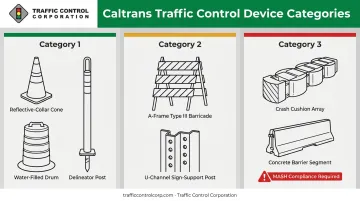
Category 3 items carry the most scrutiny because they're crashworthy safety hardware. Verify these against the applicable MASH (Manual for Assessing Safety Hardware) resource before specifying them on any project.
Authorized Materials Lists and Compliance Verification
Authorized Materials Lists (AMLs) exist for traffic signal control equipment, LED luminaires, and LED traffic signal modules, among other categories. Only products appearing on the relevant list can go on a state project.
Getting listed isn't a rubber stamp. Manufacturers submit products with technical data, quality control documentation, and qualification test results. Caltrans can pull a product from the list at any time, and AML status doesn't replace certificates of compliance, QC test data, or field inspection at acceptance.
For luminaires, signal heads, LED modules, and accessible pedestrian signals specifically, the resident engineer collects manufacturer QC test data and, where applicable, certificates of compliance before installation is approved.
Other state DOTs run comparably rigorous but distinct approval frameworks. A product listed in one state's AML isn't automatically cleared for another. That's precisely why agencies and contractors working across multiple jurisdictions lean on distributors who track these differences instead of relearning them project by project.
Traffic Signal Controller Specifications Explained
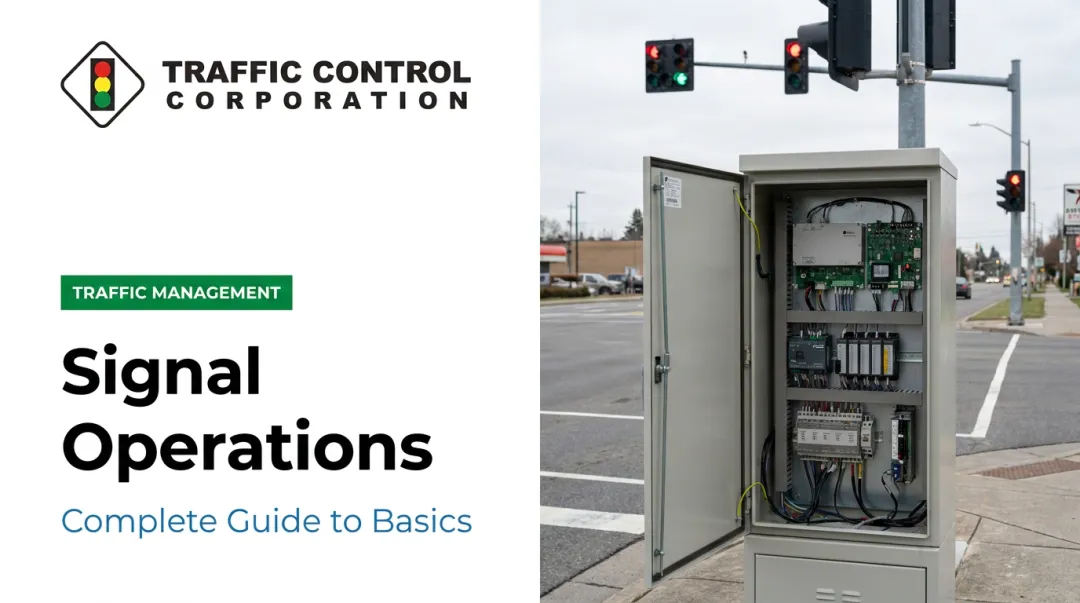
A traffic signal controller manages intersection timing, phase sequencing, and coordination with neighboring intersections. It's the brain of the intersection, and everything else in the cabinet reports to it.
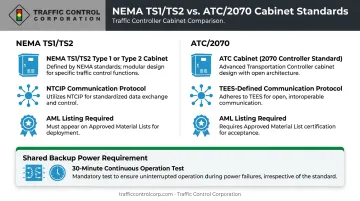
Caltrans projects specify one of two controller platform families:
- NEMA TS1/TS2 – Traditional NEMA cabinet architecture, with TS2 assemblies including NTCIP communication requirements
- ATC/2070 – Advanced Transportation Controller architecture, an open modular platform defined by the Transportation Electrical Equipment Specifications (TEES)
These aren't interchangeable. The contract will specify which architecture applies, and mixing them up delays acceptance.
Cabinet requirements follow the same logic as controllers. Controller cabinets and battery backup system (BBS) cabinets must appear on the applicable Authorized Materials List for traffic signal control equipment. No exceptions for "equivalent" products that haven't gone through the process.
Beyond cabinet hardware, communication and software requirements cover compatibility with standard protocols used for signal coordination and central management systems. This ensures the controller can talk to both the field cabinet hardware and the agency's central traffic management platform without a custom workaround.
Just as communication protocols can't be improvised, backup power is non-negotiable on Caltrans work:
- BBS equipment must include automatic transfer switches
- The resident engineer must witness a test demonstrating 30 minutes of continuous operation without utility power
- Portable traffic signals cannot run on generators
Before a controller gets accepted, manufacturers must supply quality control documentation, including test data and certificates of compliance, matching what's required for every other electrical component on the project.
Essential Equipment Used in Traffic Signal Control Systems
A Caltrans signal system involves far more hardware than the controller and cabinet alone. Here's the core equipment breakdown:
- Signal heads and LED signal modules, plus visors
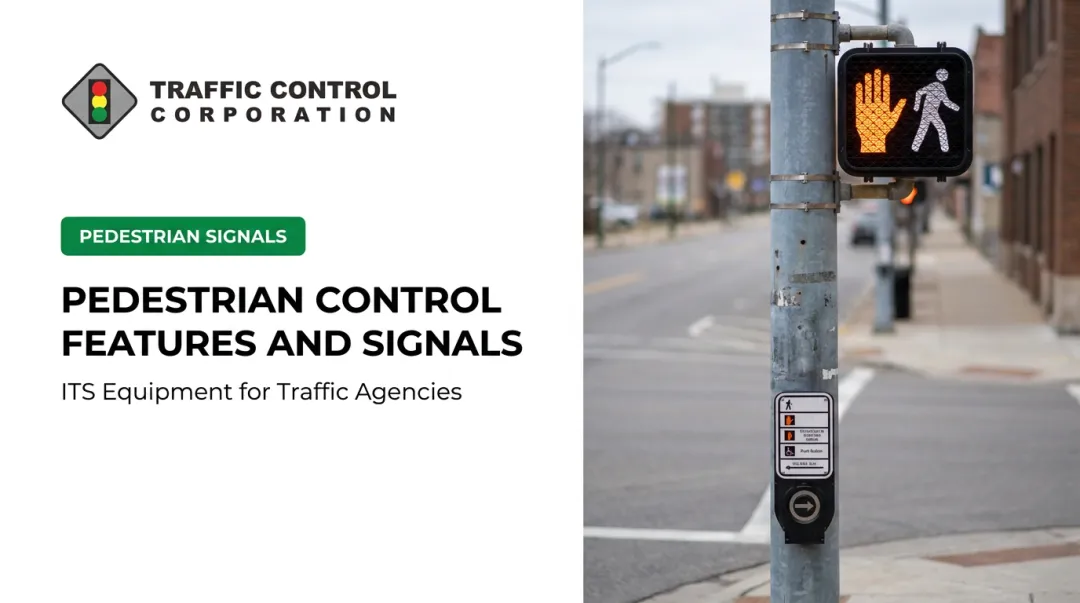
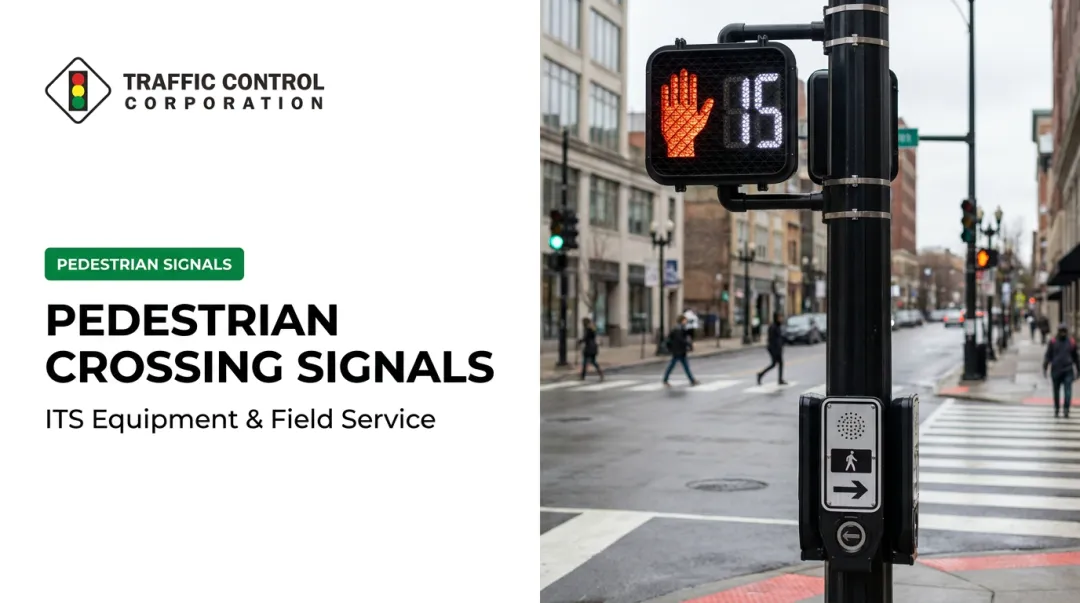
- LED countdown pedestrian signal faces
- Accessible pedestrian signals (APS)
- Controller cabinets, poles, and mast arms
- Luminaires
Detection equipment actuates signal timing based on real traffic conditions. Options include:
- Inductive loops (still common, tested for continuity, resistance, and insulation before final acceptance)
- Video detection systems
- Radar and microwave sensors, including dedicated AML-listed microwave vehicle detection systems
Temporary vs. Permanent Equipment
Construction zones often need portable signal systems or temporary flashing beacons rather than permanent installations. Both temporary systems still require backup power and automatic transfer switches; the rules don't relax just because the equipment is short-term.
One hard fallback rule is worth flagging: if a portable or temporary signal system goes out of operation, the contractor must provide flaggers. This applies until the signal is back up, whether the outage was planned or not.
Every equipment category, from luminaires to LED modules to signal heads, carries its own manufacturer QC test data requirement. There's no blanket approval that covers multiple categories at once, which is one reason project teams spend so much time cross-referencing specs against AML entries.
Distributors like TCC handle this cross-referencing daily, matching cabinet models, MMU units, and detection hardware to each agency's compliance standards before equipment ships.
Traffic Signal Cable Specifications
Signal systems depend on three main categories of cable and wiring:
- Signal interconnect cable, connecting intersections for coordinated timing (Caltrans design guidance suggests considering interconnect for signals less than 0.5 mile apart)
- Detector loop lead-in cable, running from inductive loops to the cabinet, with waterproofed ends and no splices permitted in the lead-in run
- Communication/fiber cable, linking controllers to central traffic management systems, typically installed with tracer wire for locating
All electrical materials, cable included, need certificates of compliance before acceptance on-site. They also have to satisfy Buy America requirements.
FHWA's manufactured-products rule requires domestic final assembly for Federal-aid projects obligated on or after October 1, 2025, with a domestic component-cost test following a year later.
Cable specs cover conductor gauge, insulation and jacket type, and whether construction is rated for direct burial or conduit installation. One caveat worth repeating: exact gauge and jacket values are project-specific. They come from the current Standard Specifications and special provisions for your contract, not from a generic table borrowed from another state's DOT.
Sourcing Certified Traffic Signal Equipment: Why a Trusted Distributor Matters
Matching a project spec to compliant products sounds simple until you're staring down dozens of manufacturers, several authorized materials lists, and a bid deadline. Contractors and agencies hit this wall constantly, especially on projects that span multiple states with different approval frameworks.
This is where a regional distributor with real compliance expertise earns its place on the project team.
Traffic Control Corporation (TCC) is a working example of that model. Founded in 1946 and based in Woodridge, Illinois, TCC represents over 40 manufacturers, including Econolite, Reno A&E, GE Current, Alpha Technologies, and Applied Information, with factory-trained field technicians covering its eleven-state Midwest territory.
What that looks like in practice:
- Product selection assistance – matching cabinet types, controller architecture, and detection equipment to a specific project spec before the bid goes out
- Onsite troubleshooting – factory-trained technicians diagnosing cabinet, controller, or detection issues in the field
- Systems training – helping agency staff and contractors get comfortable with new controller platforms and ATMS deployments
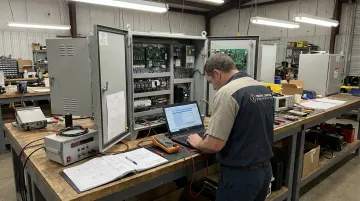
- Conflict monitor certification and cabinet audits – bench-testing MMU/CMU units against NEMA fault-detection standards and documenting the results for agency compliance records
None of this replaces the engineering judgment a project team brings to a state DOT contract. But working with a distributor that understands multi-state compliance nuances cuts down on the back-and-forth that otherwise eats up weeks of schedule, regardless of which state's standards apply.
Frequently Asked Questions
What is the traffic signal controller specification?
Controller specs define the required cabinet architecture (NEMA TS2 or ATC/2070) and communication protocol compatibility. They also mandate backup power with automatic transfer switches and listing on the applicable Authorized Materials List.
What equipment is used in traffic control?
Core equipment includes signal heads and LED modules, controller cabinets, detection sensors, pedestrian signals, and poles or mast arms. Temporary work zones add cones, drums, and barricades alongside permanent signal hardware.
What is the specification of traffic signal cable?
Cable specs cover conductor gauge, insulation and jacket rating, and whether the construction is direct-burial or conduit-rated. They also require Buy America compliance and certificate-of-compliance documentation before installation.
What are Caltrans Standard Plans for traffic signals?
Contracts reference Standard Plans, standardized drawings that show approved installation details, staking, and layout for signal heads, poles, foundations, and other traffic control components.
Who is responsible for maintaining traffic signal equipment compliance during a project?
Contractors must keep devices in good working order throughout construction. Resident engineers verify ongoing compliance through inspections, QC documentation review, and testing.
What is the difference between temporary and permanent traffic signal systems?
Portable or temporary systems operate during construction and require backup power plus flagger fallback if they fail. Permanent systems are installed and accepted under the full Sections 86-87 process, including final operational testing.