For Midwest transportation professionals, staying current with TSSC proceedings matters beyond academic interest. The topics debated at these meetings tend to shape FHWA guidance, inform MUTCD updates, and eventually define procurement specifications. What the committee works through today becomes standard practice within a few years.
This article covers what the TSSC is, how its mid-year meetings have evolved, the research themes most likely to define 2026 discussions, and what Midwest agencies should do with that information.
Key Takeaways
- The TSSC (ACP25) is TRB's standing committee for signal systems, covering controllers, detection, connected vehicles, and safety
- Mid-year meetings go deeper than the annual TRB event: subcommittee sessions, technical workshops, and research competitions
- A 2026 NCHRP synthesis found 83% of state DOTs use ATSPM solutions, making performance measures a near-certain agenda topic
- AI-driven signal control, V2X integration, and signal cybersecurity are all moving up the TRB research agenda
- Meeting papers and research findings are publicly accessible via TRB's TRID database
What Is the TRB Traffic Signal Systems Committee?
The Traffic Signal Systems Committee — currently designated ACP25 (historically AHB25) within the Transportation Research Board — focuses on the management of signalized intersections, the systems and technologies involved in their operation, and their interaction with emerging mobility and connected infrastructure.
Committee membership spans the full signal systems ecosystem:
- Transportation researchers and academics
- State and local DOT engineers
- ITS consultants and industry practitioners
- Technology vendors and standards developers
That mix of perspectives keeps research priorities grounded in field reality. When the committee identifies a gap — say, limited guidance on pedestrian detection timing — it tends to get addressed through NCHRP projects, FHWA resources, or pooled-fund studies that eventually reach local agencies.
Annual Meeting vs. Mid-Year Meeting
The annual TRB meeting runs each January at the Walter E. Washington Convention Center in Washington, D.C. It's a sprawling event covering every transportation discipline, where TSSC presents Best Paper Awards and participates in the broader program.
The mid-year meeting operates on a different scale. Held in summer at a rotating host city, it concentrates on committee business: subcommittee working sessions, technical plenaries, research competitions, and technical tours tied to the host agency's infrastructure. Smaller attendance means practitioners can engage directly with researchers — not just observe the work, but help shape its direction.
How TSSC Mid-Year Meetings Have Evolved
Official TRB program records document a clear trajectory across recent mid-year meetings.
2019 — Woods Hole, Massachusetts (August 6–8) The program ran under the historical designation AHB25 and included seven subcommittee sessions alongside a structured research competition. Sessions titled "Big Data Peek in Future," "Big Data and ATSPM," and "Big Data Competition Presentations" signaled a decisive turn toward data-driven signal operations. The competition format had teams develop algorithms or visualization tools using real-world datasets, then present live — creating a direct pipeline from academic research to practitioner-ready tools.
2022 — Irvine, California (July 6–8) The program covered connected intersections, communications standards, and deployment case studies, with a technical tour of City of Anaheim facilities and a connected-vehicle testbed. The tour model illustrates a recurring pattern: host cities are selected partly because their infrastructure demonstrates concepts discussed in the sessions.
2023 — Irvine, California (May 31–June 1) Theme: "Safety, Accessibility, and Equity in Traffic Signal Infrastructure." Subcommittees included Simulation, Multimodal, Signal Timing, Asset Management, Education, and Technology and Standards — a lineup reflecting how broadly the committee now defines signal systems work.
Across these meetings, the structure stays consistent: a central theme tied to the most pressing current challenge, structured subcommittee work, practitioner case studies, and a technical tour grounded in local context. What has changed is the subject matter — from hardware-focused sessions toward performance measurement, data analytics, and equity — tracking the actual evolution of the field.
Key Themes Expected to Shape 2026 Discussions
No official ACP25 mid-year dates, location, or agenda have been announced as of this writing. What follows reflects research trends and documented committee priorities — not confirmed 2026 programming.
Automated Traffic Signal Performance Measures (ATSPMs)
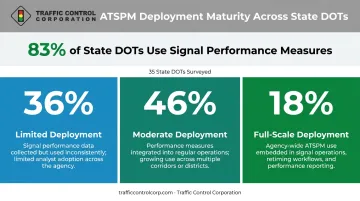
ATSPMs are likely to remain central. A 2026 NCHRP synthesis surveyed 42 state DOTs and found 35 (83%) used signal performance measure solutions. Deployment maturity among those users varied considerably:
- Full-scale deployment: 18% of agencies
- Moderate deployment: 46% of agencies
- Limited deployment: 36% of agencies
The principal barriers — outdated controllers, detection limitations, and staffing constraints — are precisely the implementation challenges that mid-year technical workshops address.
FHWA frames ATSPMs as tools supporting objectives- and performance-based signal operations. The agency does not mandate them, but the funding landscape under the Infrastructure Investment and Jobs Act makes performance-based approaches increasingly attractive for agencies pursuing federal support.
AI and Machine Learning in Signal Control
Peer-reviewed research in this area is accelerating. A 2025 Transportation Research Record paper proposed multi-intersection control using graph-attention networks combined with deep reinforcement learning — an approach that signals where academic work is heading but remains far from agency-scale deployment. USDOT's ITS Knowledge Resources already documents AI and machine learning applications for real-time adaptive signal timing.
The practical gap between research-stage algorithms and field deployment — spanning data requirements, controller compatibility, and performance verification — is where committee discussion will add the most value for practitioners.
V2X and Connected Intersection Integration
SPaT (Signal Phase and Timing) broadcasts, MAP (intersection geometry) data, and connected pedestrian applications are all active research areas. GDOT's connected vehicle roadmap documents pilot intersections broadcasting SPaT and MAP data, and USDOT's deployment map catalogs a growing number of operational and planned connected-vehicle sites — though no reliable aggregate national count of SPaT-equipped intersections exists.
One ITS deployment estimate put the cost of equipping 1,700 signalized intersections with V2X technology at $25 million to $45 million. That figure makes the case for practical guidance on phased deployment and technology selection before agencies commit capital.
Cybersecurity of Networked Signal Infrastructure
As traffic controllers become more IP-connected, cybersecurity is a core operational risk — not an afterthought. NCHRP Project 03-127 conducted penetration testing on 13 field devices, including three traffic signal controllers and three conflict monitors. The project team is developing risk assessment and mitigation guidance for agencies, and FHWA's Traffic Signal Program Handbook points directly to NCHRP 03-127 for controller security guidance.
Pedestrian Safety and Accessible Signals
Safety outcomes bring the infrastructure conversation back to street level. The 2023 MUTCD (Part 4) updated requirements for accessible pedestrian signals, audible and vibrotactile walk indications, passive detection, and pedestrian clearance timing. With NHTSA reporting 7,080 pedestrian deaths nationwide in 2024, the policy pressure on agencies to deploy APS, improve pedestrian detection, and verify clearance timing remains substantial.
What to Expect: 2026 Mid-Year Meeting Format
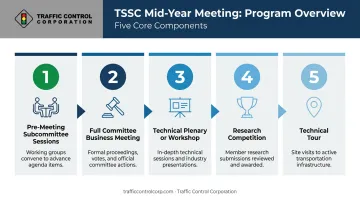
Based on documented programs from 2019, 2022, and 2023, the typical mid-year structure includes five core components:
- Pre-meeting subcommittee sessions — working groups covering Signal Timing, Asset Management, Multimodal, Technology and Standards, Simulation, and Research, where members work through technical problems and vote on research priorities
- Full committee business meeting — formal votes on committee activities, research agendas, and administrative matters
- Technical plenary or workshop — typically a half- to full-day session on the meeting's central theme, featuring practitioner case studies, research presentations, and panel discussions from agencies that have deployed the featured technologies
- Research competition (documented for 2019; not confirmed every year) — teams submit algorithms or visualization tools using real-world datasets, present live, and compete for recognition; this format has proven effective at moving academic work into practitioner hands
- Technical tour of host-city infrastructure — signal systems, TMCs, or smart corridors — giving attendees direct exposure to how the host agency has implemented the concepts discussed in sessions
The format above reflects past meeting programs. For confirmed 2026 dates, location, and agenda, check the official TSSC committee website at Iowa State University and TRB's event calendar directly.
What Midwest Agencies Should Do Next
TSSC proceedings are worth tracking even if your agency cannot send staff to the mid-year meeting — the research pipeline, public outputs, and peer benchmarking data all remain accessible year-round.
Follow the Research Pipeline
Committee priorities influence FHWA guidance, MUTCD revisions, and national best practice documents. The 2023 MUTCD Part 4 updates, for example, reflect years of committee and research community work on pedestrian signal accessibility. Agencies that track TSSC research stay ahead of specification changes rather than scrambling to catch up.
Access Meeting Outputs Without Attending
Access papers, research challenge findings, and committee reports through TRB's TRID database at trid.trb.org. A TRID record does not always guarantee free full text — some documents require institutional access — but bibliographic discovery and many full reports are freely available.
Use Research Findings to Justify Technology Upgrades
ATSPM adoption case studies from mid-year meetings and NCHRP syntheses provide documented benchmarking data that traffic engineers can use internally. The NCHRP synthesis categories — full, moderate, limited, or no deployment — give agencies a clear framework for assessing where they stand relative to peers and explaining what a next step would cost and require.
The NCHRP synthesis also flags the specific barriers most agencies encounter: outdated controllers, detection limitations, and staffing. Addressing those barriers in sequence is more defensible in a budget request than an all-at-once approach:
- Controller upgrades — replace outdated hardware to generate high-resolution event data
- Detection improvements — address sensor gaps that limit data quality
- Analytics software — deploy ATSPM platforms once the data foundation is in place
Work With Regional Partners Who Understand the Technology
For Midwest agencies, translating TSSC-driven research into local implementation requires partners who understand both the technology and the regional procurement context. TCC (Traffic Control Corporation) has served state and local agencies across eleven Midwest states for over 75 years, distributing the Econolite platform — including Centracs® SPM for signal performance measurement and Cobalt® controllers that generate the high-resolution event data ATSPMs require.
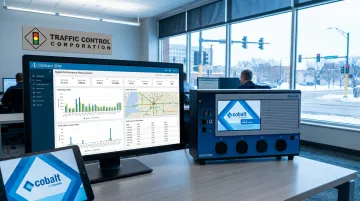
TCC also offers training on the Centracs® ATMS platform at its Woodridge, Illinois facility, with on-site options available across the region.
Frequently Asked Questions
What is the TRB Traffic Signal Systems Committee (TSSC)?
The TSSC (currently designated ACP25) is a standing Transportation Research Board committee that advances research and practice in traffic signal systems. It brings together researchers, DOT engineers, and industry practitioners to set the national research agenda for signal operations, detection, connected infrastructure, and safety.
When and where is the TSSC Mid-Year Meeting held?
The mid-year meeting typically takes place in July or August at a rotating host city (separate from the annual TRB meeting held each January in Washington, D.C.). No official 2026 dates or location have been announced — confirm current details through the official TSSC website hosted at Iowa State University.
Who should attend the TSSC Mid-Year Meeting?
The meeting is most relevant for traffic signal engineers, transportation researchers, state and local DOT staff, ITS consultants, and technology vendors involved in signal systems, detection, and connected vehicle infrastructure. The focused format gives practitioners direct engagement with active committee research — something larger conferences rarely offer.
What topics does the TSSC Mid-Year Meeting typically cover?
Recurring themes include signal performance measurement (ATSPMs), adaptive and connected signal control, intersection safety, big data analytics, hardware and communications standards, and emerging mobility integration. Recent years have added cybersecurity and accessibility as prominent focus areas.
How do TSSC meeting outcomes affect local traffic operations?
Committee research feeds into FHWA guidance documents, MUTCD updates, and national best practice publications — shaping how local agencies design, operate, and procure signal systems, typically within a few years of the underlying work.
How can agencies that cannot attend still benefit?
Meeting papers, research challenge results, and committee reports are publicly available through TRB's TRID database at trid.trb.org. Agencies can search by committee designation (ACP25) or topic to locate relevant documents and apply findings to local operations without attending in person.