What is traffic signal preemption TSP?
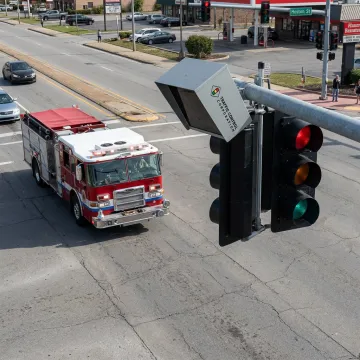
Traffic signal preemption is a control strategy that allows authorized vehicles, such as fire trucks, ambulances, or emergency response units, to interrupt normal signal timing. When a valid preemption call is received, the controller moves toward a programmed green path for the responding vehicle while safely clearing conflicting movements. TSP often means transit signal priority, which is related but less disruptive.
What is the difference between signal preemption and signal priority?
Signal preemption temporarily overrides normal signal operation for critical movements, most often emergency vehicles or railroad crossings. Signal priority, commonly used for buses or transit, adjusts timing within defined limits to reduce delay without fully interrupting coordination. Preemption has higher authority, stricter programming requirements, and more safety documentation because it changes how the intersection serves conflicting traffic.
How does an infrared preemption system work?
An infrared EVP system uses an optical emitter on an emergency vehicle and a receiver mounted near the intersection. When the receiver detects a valid coded signal, it sends a call to the controller cabinet. The controller then follows its programmed preemption sequence, including vehicle clearance intervals, phase selection, priority handling, and confirmation beacon feedback when configured.
What is included in an EVP audit?
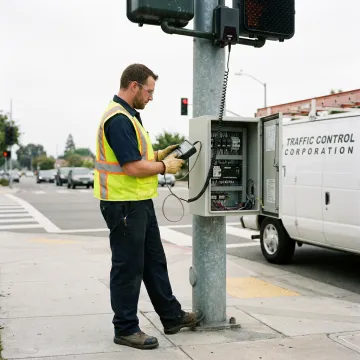
An EVP audit typically includes testing receivers on each approach, validating range and directional discrimination, confirming controller preemption programming, reviewing call priority, checking wiring and cabinet inputs, and verifying confirmation beacon operation. TCC documents results so transportation agencies and fire or EMS departments know which approaches are functioning properly and which components need recalibration, repair, or replacement.
How often should emergency vehicle preemption be tested?
Agencies should test emergency vehicle preemption on a regular maintenance cycle and after any signal rebuild, controller replacement, cabinet wiring change, or emergency vehicle emitter update. Field conditions also matter: receiver alignment, dirty lenses, construction changes, and programming edits can reduce performance. Routine verification helps identify silent failures before emergency responders rely on the system.
Why would an infrared preemption system fail?
Common issues include misaligned optical receivers, insufficient detection range, poor directional discrimination, failed confirmation beacons, damaged wiring, incorrect controller inputs, or programming that does not match the agency’s intended preemption sequence. TCC technicians work through the field equipment and controller cabinet to determine whether the failure is optical, electrical, configuration-based, or hardware-related.
Can TCC help with controller preemption programming?
Yes. Preemption calls must be configured in the traffic signal controller with the correct phases, priorities, clearance behavior, and recovery settings. The controller also needs to recognize the receiver input correctly. During service, TCC verifies the programming and call response so the intersection behaves predictably when an authorized emergency vehicle requests preemption.
What areas does TCC support for EVP service?
TCC supports state and local transportation agencies, departments of transportation, municipal governments, county transportation departments, contractors, and consulting service providers. Service areas include Illinois, Indiana, Iowa, Kansas, Michigan, Minnesota, Missouri, Nebraska, North Dakota, South Dakota, and Wisconsin, with regional support from Woodridge, Illinois and branch locations across the Midwest.