Introduction
Anyone who's tried to cross a four-lane arterial road on foot knows the drill: wait for a gap in traffic, judge your speed against a driver who may or may not slow down, and hope for the best.
Traffic crashes killed nearly 7,300 pedestrians in the U.S. in a recent year, according to NHTSA data, and mid-block or unsignalized crossings are consistently where these incidents cluster.
The HAWK pedestrian signal closes that gap. The MUTCD officially calls it a Pedestrian Hybrid Beacon, and it gives pedestrians a legally enforceable stop signal at locations where traffic volumes don't justify a full traffic light.
This article covers what HAWK stands for, exactly how the signal sequence works, where agencies install them, what the safety data shows, and what installation typically costs.
Key Takeaways
- HAWK stands for High-intensity Activated crossWalK, the MUTCD's official Pedestrian Hybrid Beacon (PHB)
- The signal stays dark until pressed, cycling through yellow, solid red, and flashing red before going dark
- FHWA research found a 69% reduction in pedestrian crashes at Tucson HAWK sites
- Installation costs typically range from $21,000 to $128,000, averaging around $57,680 per unit
What Is a HAWK Pedestrian Signal?
A HAWK signal is a pedestrian-activated crossing device that sits dark and unlit until someone presses the call button. That's the key difference from a conventional traffic signal, which cycles continuously through green, yellow, and red whether or not anyone's waiting to cross.
HAWK is the popular nickname. The Manual on Uniform Traffic Control Devices (MUTCD) officially calls it a Pedestrian Hybrid Beacon, covered under Section 4F in the 2009 edition and Section 4J in the current 11th edition. Engineers and DOT plans typically use "PHB," while the public and local media tend to stick with "HAWK."
The signal head itself is distinctive:
- Two red lenses positioned side by side
- One yellow lens mounted below the red pair
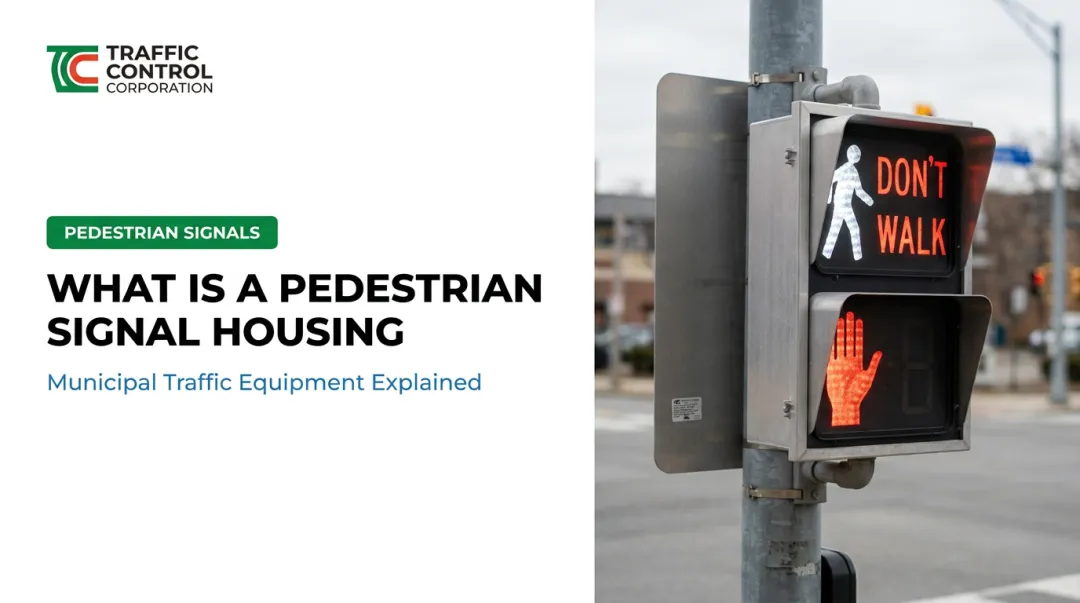
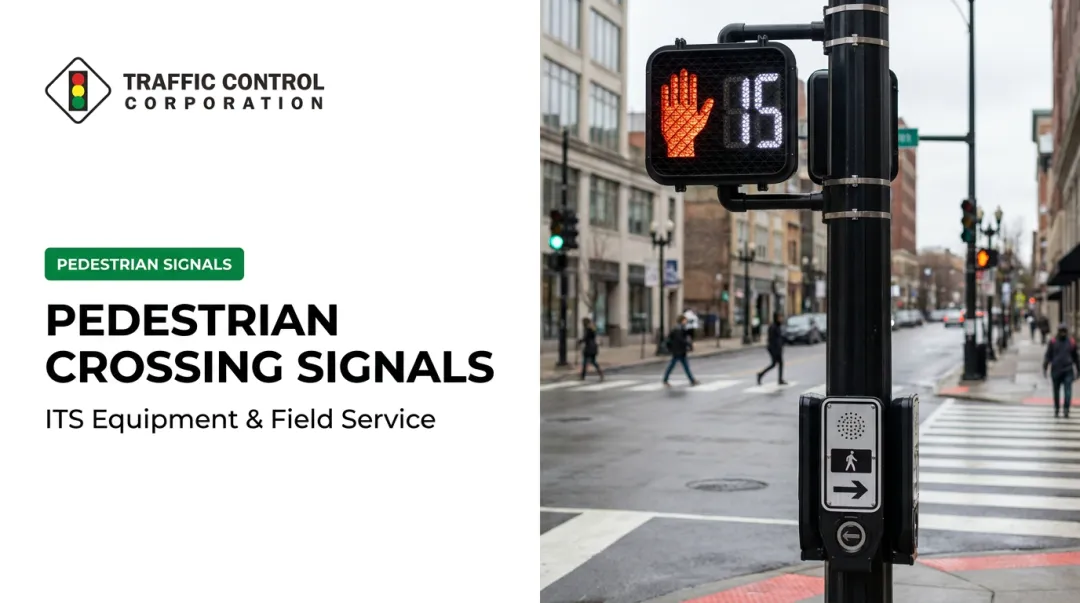
- Paired with standard pedestrian signal heads showing WALK/DON'T WALK indications
According to the Federal Highway Administration (FHWA), the City of Tucson developed the HAWK concept in the late 1990s, and it was formally adopted into the 2009 MUTCD as a nationally recognized device. Tucson's early installations, including a crossing near Hollinger school on Ajo Way, became the model other cities studied before adopting the treatment themselves.
What Does HAWK Stand For?
HAWK stands for High-intensity Activated crossWalK. FHWA credits Tucson traffic engineers with coining the name, playing off the image of a hawk watching over the road until it "activates" to protect crossing pedestrians. It stuck, and now most people say "HAWK" even on projects labeled PHB in the official paperwork.
How Does a HAWK Signal Work? (Signal Sequence Explained)
A HAWK signal moves through a distinct sequence every time it's triggered. Understanding the phases matters for both drivers and the agencies specifying these devices.
- Dark/inactive phase – Vehicles have the right-of-way and proceed as normal. Nothing is illuminated until a pedestrian presses the call button.
- Flashing yellow – Once activated, the beacon flashes yellow to warn approaching drivers that a change is coming. Drivers should begin slowing down.
- Steady yellow – The light transitions to solid yellow, signaling drivers to stop if they can do so safely.
- Solid red – Both red lenses illuminate steadily. Motorists must come to a full stop. Pedestrians receive their WALK indication and begin crossing.
- Alternating flashing red (wig-wag) – The reds alternate flashing. Drivers may proceed once stopped completely and the crosswalk is clear, similar to a four-way stop. A pedestrian countdown timer runs simultaneously, showing how much crossing time remains.
- Return to dark – Once the cycle ends, the signal goes dark again, and normal vehicle flow resumes until the next pedestrian activation.
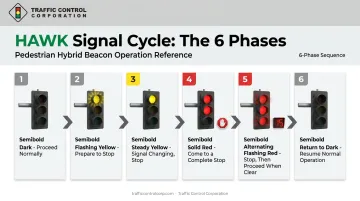
For a quick reference, here's how each phase reads to approaching drivers:
| Phase | Signal Display | Driver Action |
|---|---|---|
| 1 | Dark | Proceed normally |
| 2 | Flashing yellow | Slow down |
| 3 | Steady yellow | Stop if safe |
| 4 | Solid red | Stop completely |
| 5 | Alternating flashing red | Proceed once clear, like a stop sign |
| 6 | Dark | Resume normal flow |
This on-demand structure is exactly what makes HAWK signals efficient. Drivers aren't stopped for a signal cycling on a timer when no one's actually crossing.
When and Where Are HAWK Signals Used?
HAWK signals aren't installed on a whim. The MUTCD requires an engineering study evaluating vehicle speed, traffic volume, pedestrian volume, and crossing distance before installation is justified. Warrant charts vary based on whether the road speed is 35 mph or below, or higher, and by crossing length (34, 50, 72, or 100 feet).
A few practical rules shape where these devices end up:
- The beacon must be placed at a marked crosswalk
- It needs to sit at least 100 feet from any side street or driveway controlled by a stop or yield sign
- If a full traffic signal warrant is also met, MUTCD guidance favors installing a conventional signal instead
Common Application Settings
HAWK signals show up most often at:
- Mid-block crossings on wide arterial roads with no nearby intersection
- Trail and bike boulevard crossings, where cyclists and pedestrians need to cross a busy street
- School and park access points, where crossing volume spikes at predictable times but doesn't justify a full signal
Most installations also include high-visibility ladder-style crosswalk markings and advance stop bars, giving drivers extra visual cues before they reach the beacon itself.
Getting these specifications right takes technical know-how, which is why agencies planning a HAWK installation often work with a regional distributor for product selection and application guidance. Traffic Control Corporation supports Midwest municipalities and DOTs through this process, offering factory-trained field support and helping match equipment to the specific geometry and cabinet type of each site.
HAWK Signal vs. Other Pedestrian Crossing Treatments
Not every flashing light at a crosswalk is a HAWK signal. The distinction matters for both compliance rates and legal enforceability.
| Treatment | Driver requirement | Reported yielding rate |
|---|---|---|
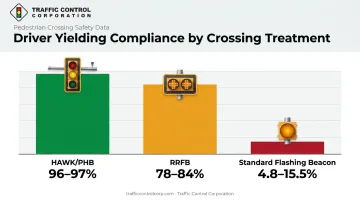
| HAWK/PHB | Must stop on solid red; may proceed on flashing red once crosswalk is clear | ~96-97% across FHWA study sites |
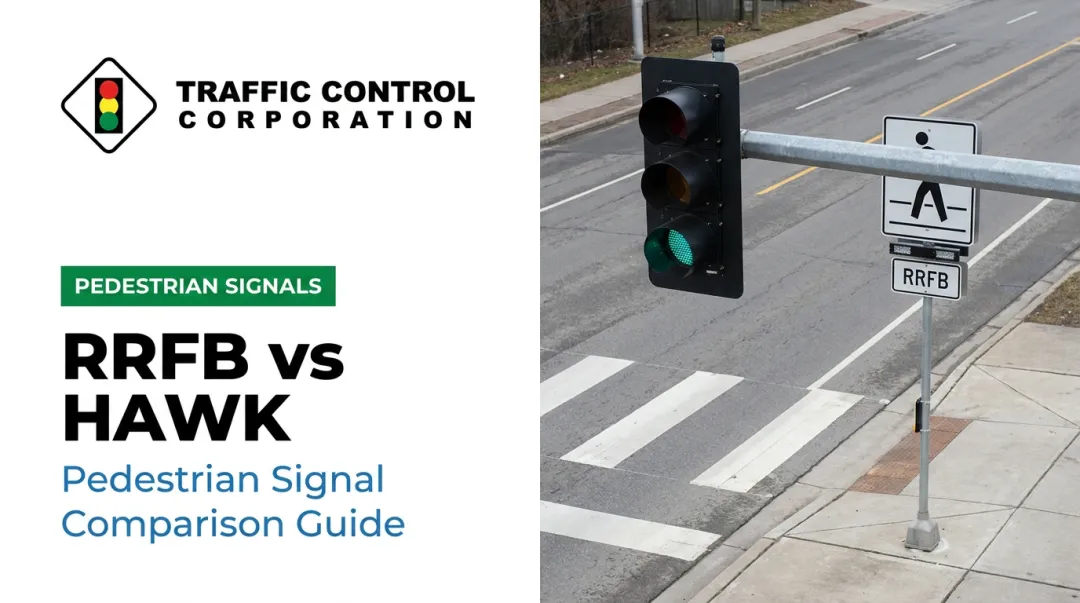
| RRFB (Rectangular Rapid Flashing Beacon) | Requested to yield, not legally required to stop | 78% at 7 days, rising to 84% at two-year follow-up |
| Standard flashing beacon | Requested to yield | As low as 4.8% baseline, 15.5% when activated |
A simple flashing warning light or RRFB only requests that drivers yield. A HAWK signal escalates to a solid red command with the same legal weight as a traffic light, according to FHWA's road user behavior study. That's the core reason HAWK compliance rates consistently outperform flashing-beacon treatments.
HAWK signals also differ from standard traffic signals in how they operate. A HAWK only activates and stops traffic on demand, while a conventional signal runs on a continuous timed cycle whether or not pedestrians are present. That difference is part of why HAWK signals cost less to run and cause less unnecessary vehicle delay.
Benefits and Safety Effectiveness of HAWK Signals
The safety numbers behind HAWK signals are among the strongest in pedestrian infrastructure research. FHWA's empirical Bayes study of 21 Tucson sites found:
- 69% reduction in pedestrian crashes after HAWK installation
- 29% reduction in total crashes at the same intersections
- Both results statistically significant at the 95% confidence level
Motorist compliance backs this up. FHWA observed 96% overall driver yielding across 20 PHB sites in Austin and Tucson, a rate that outpaces RRFBs and standard flashing beacons by a wide margin.
That said, high compliance doesn't mean zero confusion. Drivers sometimes misunderstand the alternating flashing-red phase, rolling through without a complete stop, and public familiarity remains limited—one Massachusetts survey found only about a quarter of respondents had even heard the term "Pedestrian Hybrid Beacon."
Cities have responded with a mix of measures:
- Public education campaigns explaining how the flashing-red phase works
- Stepped-up enforcement targeting rolling stops at PHB crossings
- Explanatory signage placed near the beacon to clarify what each phase requires
Tucson combined outreach with stepped-up enforcement in its early years, a strategy that contributed to the strong compliance numbers seen in later studies.
Cost of Installing a HAWK Pedestrian Signal
Budget expectations vary widely depending on site conditions. According to FHWA's Pedestrian Hybrid Beacon technical guidance, installation costs typically run $21,000 to $128,000 per unit, averaging around $57,680. Cedar Rapids, Iowa reports a narrower local range of $50,000-$75,000.
What drives the cost variation:
- Pole and mast arm type (span-wire versus mast-arm mounted)
- Wiring, conduit, and controller cabinet requirements
- Signage, including CROSSWALK STOP ON RED signs
- Pavement markings and accessibility upgrades
- Permitting, site conditions, and any utility relocation work
Because scope differs so much project to project, treat a national average as only a rough starting point for planning. A parking lot–adjacent trail crossing with existing conduit costs far less than a mid-block arterial install requiring new utility work.
This is where working with an established regional distributor pays off. Traffic Control Corporation has supported Midwest agencies since 1946, with a multi-million dollar equipment inventory at its Woodridge, Illinois facility.
That inventory helps reduce procurement delays on projects across Illinois, Indiana, Iowa, Kansas, Michigan, Minnesota, Missouri, Nebraska, and the Dakotas. Stocked equipment paired with factory-trained field support helps agencies avoid back-order delays that inflate project timelines and costs.

Frequently Asked Questions
What does the HAWK signal stand for?
HAWK stands for High-intensity Activated crossWalK. Its official MUTCD name is Pedestrian Hybrid Beacon, though most people still use the HAWK nickname coined in Tucson.
How much does a HAWK pedestrian signal cost?
Installation typically costs $21,000 to $128,000, averaging around $57,680 per unit. Costs vary based on pole type, wiring, signage, permitting, and site conditions.
What is the difference between a HAWK signal and a warning light?
A HAWK signal escalates to a solid red phase that legally requires drivers to stop, similar to a traffic light. A standard flashing warning beacon only requests that drivers yield, with no legal stop requirement.
Is a HAWK signal the same as a traffic light?
No. A HAWK signal stays dark and only activates when a pedestrian presses the button. A standard traffic light runs on a continuous timed cycle regardless of pedestrian activity.
Do pedestrians always have the right of way at a HAWK signal?
Pedestrians get priority during the WALK and flashing-hand countdown phases. Once the flashing-red phase begins, crossers already in the roadway should finish promptly, since vehicles may proceed after stopping if the crosswalk is clear.
Where are HAWK signals typically installed?
Common locations include mid-block crossings on busy arterial roads, trail and bike boulevard crossings, and access points near schools or parks where a full traffic signal is not warranted.