Introduction
Picture a traffic operator watching a wall of monitors during rush hour. A camera is panned toward one ramp when a vehicle stalls two lanes over on a different approach. By the time anyone notices, traffic is already backing up.
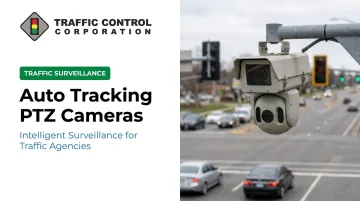
This is the core weakness of manual PTZ monitoring: a single set of human eyes can only watch one thing at a time. Auto tracking PTZ cameras solve this by letting the camera find and follow the incident itself, no joystick required.
Traffic management centers across the Midwest and nationwide are adopting this technology as part of broader Intelligent Transportation Systems (ITS) upgrades. This article covers how auto tracking PTZ technology works, the benefits it offers DOTs and municipalities, the features worth evaluating, and where it's being used on real roadways today.
Key Takeaways
- Auto tracking PTZ cameras use AI to follow vehicles or pedestrians without operator input
- A single unit extends coverage across an intersection, cutting reliance on multiple fixed cameras
- AI-based classification filters false triggers like blowing debris or shifting shadows
- Weatherproofing, zoom range, and ITS compatibility are the top deployment factors
- TCC distributes AI-powered PTZ systems for outdoor roadway conditions across 11 Midwest states
What Is an Auto Tracking PTZ Camera?
A PTZ camera pans, tilts, and zooms, either on a preset schedule or under manual control from an operator's joystick. PTZ auto tracking is the software layer that lets the camera detect a moving object and follow it automatically, adjusting pan, tilt, and zoom in real time without a person at the controls.
Traditional PTZ cameras depend entirely on an operator to notice something worth watching and then steer the lens toward it. That works fine when staffing is high and traffic is light. It breaks down during rush hour, multi-vehicle incidents, or overnight shifts when one person is monitoring dozens of camera feeds at once.
Auto tracking removes that bottleneck through three AI components working together:
- Computer vision: interprets the video feed pixel by pixel to identify shapes and movement
- Object detection: classifies what it sees (vehicle, pedestrian, debris)
- Machine learning models: refine tracking accuracy based on recognized motion patterns over time
Auto Tracking PTZ vs. Traditional Fixed and Manual Cameras
Here's the basic mechanic: a fixed or wide-angle sensor watches a scene, spots motion, calculates rough coordinates, and hands those coordinates to the PTZ unit. The PTZ camera then pans, tilts, and zooms to keep that object centered in frame, continuously recalculating as the object moves.
The practical advantage at a busy intersection or interchange is coverage. Instead of installing separate fixed cameras aimed at every approach, ramp, or lane, one auto-tracking PTZ unit can shift its field of view to follow whatever is happening in real time.
Agencies weighing fixed-camera arrays against a single PTZ unit typically consider three factors: site geometry, how many approaches need simultaneous visibility, and whether continuous coverage of every angle is required. Dynamic follow-the-action coverage often serves the operational goal better than static, always-on views.
How Auto Tracking PTZ Technology Works
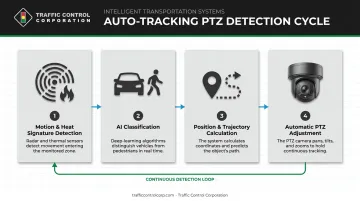
The detection-to-tracking pipeline runs in a continuous loop. Here's the sequence:
- Motion or heat signature detection: a sensor identifies something moving in the scene
- AI classification: the system determines whether it's a vehicle, pedestrian, or debris
- Position and trajectory calculation: software estimates where the object is heading
- Automatic PTZ adjustment: the camera pans, tilts, and zooms to keep the target centered
When multiple objects appear at once, the system has to prioritize. A stopped vehicle blocking a live lane matters more than a pedestrian safely on the shoulder, and well-configured systems weight targets accordingly rather than treating every moving object the same way.
Accuracy also improves with exposure to a specific site. As the system logs how light shifts across a day, how weather affects visibility, and how traffic typically flows through that particular intersection, its detection models adapt to local conditions rather than relying solely on generic training data.
Role of AI in Reducing False Alerts
Outdoor roadway environments are noisy from a computer vision standpoint. Blowing debris, swaying signage, shifting shadows, and wildlife can all register as motion.
Vehicle- and human-specific classification filters much of this out before it ever reaches an operator. Roadway detection performance still varies with conditions, though.
In a Caltrans-reviewed evaluation, commercially deployed incident detection systems achieved detection rates of 81 to 86 percent, with corresponding false-alarm rates between 14 and 19 percent. Those figures reflect calibrated video analytics performance generally, not one auto-tracking product specifically. Still, they confirm that no system is immune to glare, night conditions, or bad weather, and agencies should expect false-alarm rates to shift accordingly.
Data Handling and Privacy Considerations
Many auto tracking systems process detection outputs as coordinates and metadata rather than storing identifiable footage of every tracked object, which matters for agencies managing public roadway video under privacy policy.
Policy varies by agency:
- TxDOT states its traffic camera feeds are not recorded at all
- NJDOT retains recorded camera images for seven calendar days before automatic overwrite
- FHWA guidance treats retention length, access rules, and public records handling as agency policy decisions, not a fixed technical standard
Any agency deploying auto tracking PTZ cameras should confirm how a given product handles data storage and align it with existing video retention policy.
Benefits of Auto Tracking PTZ Cameras for Traffic & Transportation Management
The case for auto tracking PTZ comes down to speed, coverage, and reduced manual burden.
Faster incident detection and response. Every minute an incident goes unverified compounds downstream. Caltrans research found that each seven-minute delay in verifying an incident adds roughly one mile to the resulting traffic queue.
A camera that detects and follows a stalled vehicle or wrong-way driver the moment it happens, rather than waiting for an operator to notice, directly shortens that verification window.
Other operational benefits include:
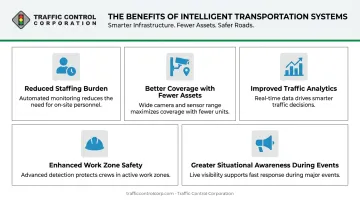
- Reduced staffing burden — automated tracking cuts the need to manually scan monitor banks, freeing staff for analysis and response
- Better coverage with fewer assets — one PTZ unit can cover an intersection, interchange, or work zone that would otherwise need several fixed cameras
- Improved traffic analytics — pattern data supports congestion studies, near-miss analysis, and signal timing optimization
- Enhanced work zone safety — cameras can flag vehicles encroaching into active work areas near crews
- Greater situational awareness during special events — dynamic tracking supports temporary monitoring for parades, sporting events, detours, or evacuations
These benefits compound. A single unit that lowers hardware costs, speeds incident response, and generates usable analytics data delivers more value than any one benefit alone.
Key Features to Consider When Selecting an Auto Tracking PTZ Camera for Transportation Use
Not every PTZ camera on the market is built for roadway duty. A few features separate transportation-grade units from general surveillance cameras.
Ruggedness and weatherproofing. Roadside cameras face temperature swings, precipitation, and vibration year-round. Look for IP66 or IP67-rated housings paired with wide operating temperature ranges rated for extreme cold and heat, since exact thresholds vary by manufacturer and model.
Zoom range and resolution. Longer optical zoom benefits highway corridors and wide interchanges where the camera needs to reach across several hundred feet. Higher megapixel counts aid license plate and vehicle identification at distance. Agencies should request the specific zoom and resolution specs for any model under consideration rather than assuming a standard figure applies across the board.
System integration. A PTZ camera is only as useful as its ability to talk to everything else in the cabinet. Look for:
- Compatibility with NTCIP-based camera control objects, the standard governing pan/tilt/zoom presets in ITS deployments
- ONVIF protocol support for interoperability across camera brands
- Integration with an existing ATMS platform, such as Econolite's Centracs, or wireless backhaul like Intuicom, delivering footage to the traffic management center without a separate network
Skipping this step is a common, costly mistake for agencies. A camera that performs well in isolation but can't hand off video to the existing signal controller or ATMS platform creates more work, not less.
Real-World Applications in Traffic & Transportation Infrastructure
Auto tracking PTZ cameras show up across several distinct transportation use cases:
- Intersection and interchange monitoring: cameras verify signal timing performance and catch incidents such as stalled vehicles or wrong-way movement in real time.
- Highway corridor and work zone surveillance relies on tracking flagger safety, watching for equipment encroachment, and spotting congestion building behind a lane closure.
- Special event and emergency management calls for temporary, flexible monitoring during evacuations, parades, or major regional incidents where fixed camera infrastructure doesn't already exist.
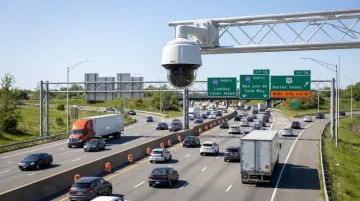
Each of these scenarios shares a common thread: conditions change quickly, and a camera that can follow the action beats one that's locked into a single fixed view.
Choosing the Right Auto Tracking PTZ Partner: How TCC Supports Transportation Agencies
Traffic Control Corporation (TCC) has distributed traffic signal equipment and ITS solutions across the Midwest for over 75 years. The company represents more than 40 manufacturers across controllers, detection, and camera technology, including WTI's Sidewinder line of AI-powered PTZ cameras built for freeway, highway, and construction zone monitoring.
Choosing an auto tracking PTZ system requires evaluating fit as much as features: does the camera integrate with your existing cabinet, controller, and ATMS platform? Can it hold up to your region's weather? Does it need a wireless backhaul solution to reach the TMC?
TCC's factory-trained field service team supports agencies and contractors through:
- Product selection and application assistance matched to intersection geometry and existing infrastructure
- Onsite troubleshooting for hardware, wiring, and communications issues
- System training so staff know how to operate and maintain new equipment
That same team serves DOTs, municipalities, and contractors across Illinois, Indiana, Iowa, Kansas, Michigan, Minnesota, Missouri, Nebraska, North Dakota, South Dakota, and Wisconsin. If your agency is evaluating auto tracking PTZ cameras for an upcoming ITS project, contact TCC for application guidance and integration support.
Frequently Asked Questions
What is PTZ auto tracking?
PTZ auto tracking is AI-driven pan-tilt-zoom technology that automatically detects and follows moving subjects, such as vehicles or pedestrians, without an operator manually controlling the camera.
How does an auto tracking PTZ camera detect and follow moving objects?
A sensor detects motion, and AI classifies the object type. Software then calculates its position and trajectory, and the PTZ unit pans, tilts, and zooms automatically to keep it centered in frame.
What is the difference between auto tracking and manual PTZ control?
Manual PTZ requires an operator with a joystick to notice and steer toward activity. Auto tracking uses AI to detect and follow targets on its own, without human input.
Can auto tracking PTZ cameras track multiple vehicles or people at once?
Yes, many systems support multi-object tracking and use prioritization logic to focus on the most relevant target. For example, a stopped vehicle blocking a live lane takes priority over a pedestrian on the shoulder.
What features matter most for outdoor traffic and transportation monitoring?
Weatherproof housings rated IP66 or IP67, sufficient optical zoom for the corridor's scale, and compatibility with existing ITS platforms and traffic signal controllers all matter most.
Do auto tracking PTZ cameras integrate with existing traffic management systems?
Integration depends on the specific camera and platform, particularly NTCIP and ONVIF compatibility. TCC's technical team can assess your existing cabinet and ATMS setup to confirm fit before purchase.