

None of them is actually a general-purpose operating system like Windows or Linux. Each is a specialized runtime, a physical chip, or a niche developer tool that happens to share a name.
This guide disambiguates all four: Google's Cobalt (the runtime behind smart TV apps), Microsoft's Azure Cobalt (a cloud CPU chip), and two smaller open-source projects — cobalt.rs and Open Cobalt. The short answer up front: there is no single "Cobalt OS." Which one you mean depends entirely on your context.
Key Takeaways
- "Cobalt" names four unrelated technologies from different makers, not a single product
- Google's Cobalt is closest to an OS: an HTML5/CSS/JS runtime for smart TVs built on the Starboard layer
- Microsoft's Azure Cobalt is a physical Arm-based CPU chip for cloud servers, not software
- cobalt.rs and Open Cobalt are unrelated open-source tools with different purposes
What Is "Cobalt"? Understanding the Naming Confusion
Tech companies reuse generic-sounding names constantly. "Titan," "Atlas," and "Falcon" all describe multiple unrelated products across different industries. "Cobalt" is no exception — at least five active, legitimately maintained technologies currently carry the name.
Here's who's typically behind a "Cobalt" search:
- Google/YouTube's Cobalt: the application container that runs YouTube and other apps on smart TVs
- Microsoft Azure's Cobalt: a line of custom-built Arm processors for cloud servers
- cobalt.rs: a Rust-based static site generator for building blogs and websites
- Open Cobalt: a Duke University virtual-world browser from the late 2000s
- Econolite's Cobalt: an ATC-compliant traffic signal controller platform running embedded Linux, used by DOTs and municipalities to manage intersections
Search engines don't distinguish between these easily, so results often blend all five together under one query. That's why you might land on a GitHub repo, an Azure product page, and a decade-old university archive within the same search session.
None of these five is a drop-in replacement for a desktop or mobile operating system. Each runs on top of, or alongside, a standard OS like Linux, Android, or Windows Server. The rest of this article walks through each one, starting with Econolite's Cobalt controller, the platform most likely to prompt an "OS" question for transportation professionals.
Google's Cobalt: The Runtime Powering Smart TVs and Streaming Devices
Google's Cobalt is an open-source, lightweight HTML5/CSS/JavaScript application container, built on Chromium and Blink, purpose-built for resource-constrained embedded devices — think smart TVs, streaming boxes, and set-top boxes. It's published on GitHub under the youtube/cobalt repository, licensed BSD-3-Clause.
Why People Call It an "OS"
Cobalt doesn't replace the Linux, RDK, or Android base running underneath it. Instead, it acts as the entire application environment on the device: the layer where TV apps like YouTube actually execute. From a user's perspective, Cobalt is the interface they interact with, which is exactly why the "is this an OS" question keeps coming up.
The Starboard Porting Layer
Starboard is Cobalt's porting and OS-abstraction layer. It isolates the platform-specific functions Cobalt needs — memory management, threading, sockets — so manufacturers can port Cobalt to new hardware without rewriting the whole application.
According to Google's own developer documentation, this consolidated abstraction means porting Cobalt to most new platforms takes only a few weeks, not months. That's a meaningful claim for device manufacturers juggling annual hardware refresh cycles.
Evergreen Updates and Core Technical Advantages
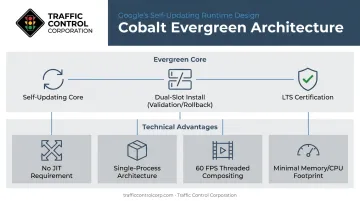
Cobalt's "Evergreen" architecture separates the updatable core from platform-specific Starboard code. That means:
- The core can self-update in the field without a full device firmware push
- Two installation slots allow validation and rollback if an update fails
- Certification-ready branches get published as Long-Term Support (LTS) releases
Beyond updates, Cobalt's technical design favors constrained hardware:
- No JIT compilation requirement, so it runs where dynamic code execution isn't supported
- Single-process architecture instead of spawning multiple processes
- Threaded compositing that targets a smooth 60 FPS for animations
- A minimal memory and CPU footprint tuned for embedded chipsets
What "Stable" Actually Means
When people search "what is the stable OS of Cobalt," they're usually asking about LTS branches. Google labels specific releases (like 25.LTS.10) as stable, meaning they're tested, feature-complete for certification requirements, and the version device manufacturers actually ship. This is Cobalt's own release-labeling convention, not a universal industry term.
Microsoft Azure Cobalt: The Cloud CPU, Not an Operating System
Here's the misconception worth clearing up immediately: Azure Cobalt is a physical Arm-based CPU chip line, not software. There's no Microsoft "Cobalt operating system." Cobalt 100 and Cobalt 200 are silicon, period.
Cobalt 100: Microsoft's First Custom Cloud CPU
Cobalt 100 is Microsoft's in-house, custom-built 64-bit Arm processor designed specifically for cloud-native workloads. Microsoft's Azure blog confirms Cobalt 100-based VMs became generally available on October 16, 2024, launching across 14 regions and later expanding to 29 datacenter regions globally.
Cobalt 200: The Next Generation
Cobalt 200 builds on that foundation with an Arm Neoverse CSS V3-based system-on-chip. Key upgrades include:
- 132 active physical cores with 3 MB of L2 cache per core
- 192 MB of shared L3 cache
- Per-core dynamic voltage and frequency scaling for efficiency
- Dedicated silicon blocks for compression and cryptography
Microsoft reports Cobalt 200 delivers 50% higher performance than Cobalt 100 across an internal benchmark suite of 140 variants, with workload-specific gains reported as high as 135% for cloud databases. Real-world adopters named by Microsoft include Databricks, Snowflake, Siemens, and Microsoft's own Teams infrastructure.
Why This Matters to the Average Reader
Most people never install anything on an Azure Cobalt chip directly. These processors run underneath cloud virtual machines and containers, so you interact with them indirectly every time you use a cloud service. That service could be a SaaS product or a company's internal workload built on Azure infrastructure.
Other Software Also Called "Cobalt"
Two more open-source projects round out the naming collision, and neither has anything to do with TVs or cloud chips.
cobalt.rs: The Rust-Based Static Site Generator
cobalt.rs is a lightweight, open-source static site generator (similar in category to Jekyll or Hugo) used to build blogs and websites from Markdown files. Contributors maintain it on GitHub under cobalt-org/cobalt.rs, under the Apache-2.0 and MIT licenses.
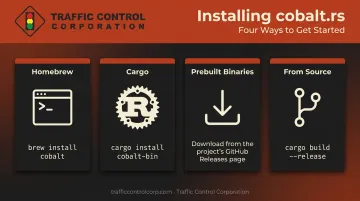
Installation is flexible:
- Homebrew:
brew install cobalt - Cargo:
cargo install cobalt-bin - Prebuilt binaries: download directly from the releases page
- From source: clone the repo and run
cargo build --release
The project even maintains a dedicated migration tool for developers moving Jekyll sites over to cobalt.rs.
Open Cobalt: The Open-Source Virtual World Platform
Duke University's Virtual Worlds Group launched Open Cobalt in 2008 as a free, peer-to-peer virtual world browser. Built on the Squeak Smalltalk environment, it let researchers and educators create collaborative 3D spaces without relying on central servers.
Researchers used it for interlinked public and private workspaces supporting collaboration and simulation-based teaching. Duke and RENCI no longer maintain the original project, though archived documentation still describes its peer-based architecture.
Which "Cobalt" Do You Mean? A Quick Comparison
Match your context to the right row: are you searching for a TV app, a cloud server chip, a website tool, a virtual world, or a traffic signal controller?
| Name | Type | Maker | Primary Use | Platform |
|---|---|---|---|---|
| Google Cobalt | Application runtime | Google/YouTube | Powers TV/streaming apps | Smart TVs, set-top boxes (via Starboard) |
| Azure Cobalt | CPU chip | Microsoft | Cloud server processing | Azure virtual machines |
| cobalt.rs | Static site generator | Open-source (cobalt-org) | Building websites/blogs | Windows, Linux, Mac |
| Open Cobalt | Virtual world browser | Duke University | Education, 3D collaboration | Peer-to-peer (Squeak-based) |
| Econolite Cobalt | Traffic signal controller | Econolite | Intersection signal timing | NEMA/ATC traffic cabinets |
None of these four is a substitute for a traditional desktop or mobile OS. Each is a specialized layer built for one job, and they don't compete with each other in practice.
If you're a traffic engineer or work in transportation, though, you likely mean the Econolite Cobalt controller, distributed by Traffic Control Corporation for intersection signal timing and traffic management.
Specialized Systems Power Critical Infrastructure Everywhere
Google's Starboard layer lets one runtime adapt to dozens of different TV chipsets without a full rewrite each time. That same principle, a stable underlying platform that lets software evolve independently of the hardware, shows up constantly in infrastructure well beyond streaming devices.
Traffic engineers searching "Cobalt controller" often land on an entirely different product: Econolite's Cobalt Series traffic signal controller, which TCC distributes across the Midwest.
It's built on the Advanced Transportation Controller (ATC) standard and runs a Linux-based operating system. The same EOS traffic control software runs across properly configured ATC-compliant hardware, a field-tested example of platform abstraction that has nothing to do with Google or Microsoft's products.
That kind of reliable, field-updatable design matters across intelligent transportation systems generally, from conflict monitors to ATMS deployments. TCC has supported that work across the Midwest for over 75 years, helping agencies keep signal infrastructure current without ripping out hardware every time standards evolve.

Frequently Asked Questions
What is the stable OS of Cobalt?
Cobalt doesn't have a single "OS." It uses Long-Term Support (LTS) release branches as its stable versions. These are tested, production-ready builds that device manufacturers deploy, distinct from daily development builds.
What is Cobalt software used for?
It depends entirely on which Cobalt you mean. Google's runs TV and streaming apps, Azure's chips power cloud servers, cobalt.rs builds websites, and Open Cobalt creates virtual worlds.
What is Microsoft Cobalt?
Microsoft Cobalt refers to Azure's custom Arm-based CPU series (Cobalt 100 and Cobalt 200), built for cloud-native workloads. It's silicon, not a software product.
Is Google's Cobalt open source?
Yes. Cobalt is available on GitHub under the youtube/cobalt repository, licensed BSD-3-Clause, allowing developers to build and contribute to it directly.
How is cobalt.rs different from Google's Cobalt?
cobalt.rs is an unrelated Rust tool for generating static websites. Google's Cobalt is a C++ browser runtime built for TV hardware. They share only a name.
Does Cobalt run on Android TV or other smart TV platforms?
Cobalt is platform-agnostic through its Starboard abstraction layer and has been ported to various embedded TV platforms, though specific device support varies by manufacturer implementation.