Pedestrian signal housings rarely get attention until they fail. When they do, the "Walk/Don't Walk" system stops working reliably, and pedestrian safety takes the hit. This post breaks down what a pedestrian signal housing actually is, how it functions inside the larger traffic signal system, and why municipalities and contractors should treat housing specification as more than an afterthought. We'll cover core components, materials, MUTCD and ADA requirements, and how to source housings built for real-world traffic volumes and Midwest weather.
Key Takeaways
- A pedestrian signal housing protects the Walk/Don't Walk display hardware, separate from the controller logic
- Materials range from cost-effective polycarbonate to rugged aluminum, suited for different exposure and vandalism risks
- MUTCD and ADA/PROWAG standards set mounting height, countdown timers, and accessible signal requirements
- FHWA research links countdown displays to measurable pedestrian crash reductions
- Sourcing through an established regional distributor ensures housing, controller, and APS compatibility
What Is a Pedestrian Signal Housing?
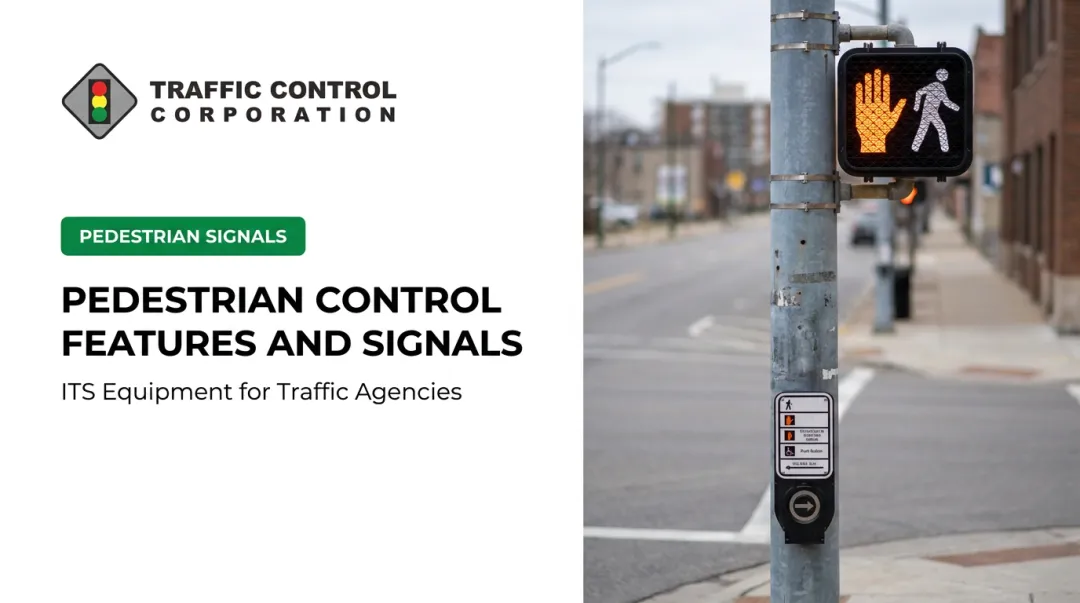
A pedestrian signal housing is the physical enclosure that protects the electronic and mechanical components controlling the "Walk" and "Don't Walk" indications at signalized crosswalks. Under the Manual on Uniform Traffic Control Devices (MUTCD), pedestrian signal heads are classified as a type of highway traffic signal, and the housing is the assembly supporting and shielding the indication module, lens, wiring terminals, and hardware inside it.
The housing is distinct from the broader pedestrian signal system: it's simply the shell, a weatherproof box protecting the parts inside. The controller logic, timing intervals, and detection inputs live elsewhere, typically in a roadside cabinet. The housing's job is narrower but critical: keep the indication visible, keep the wiring dry, and keep tampering out.
Core Components Inside the Housing
Most pedestrian signal housings contain:
- Signal indication module - the walking-person and upraised-hand LED display
- Wiring and circuit connections - terminal blocks linking the module to the controller
- LED lamp units - now standard over older incandescent units
- Backplates and visors - improve visibility and cut down on glare
- APS hardware - push buttons, audible tones, and vibrotactile arrows for pedestrians with visual impairments
Many housings also include mounting brackets and connections to backup battery systems, keeping the walk signal operating during a power outage. TCC's Econolite-sourced 16-inch polycarbonate housings, for example, include molded mounting bosses designed to accommodate audible pedestrian equipment from multiple manufacturers, which matters when a spec calls for APS compatibility down the line.
Where They Fit in the Larger Traffic System
Pedestrian signal housings connect to the same traffic signal controller that times vehicle phases, so the walk interval, flashing don't-walk countdown, and steady don't-walk display all stay coordinated with cross traffic. They're usually mounted on or near the same pole as vehicle signal heads.
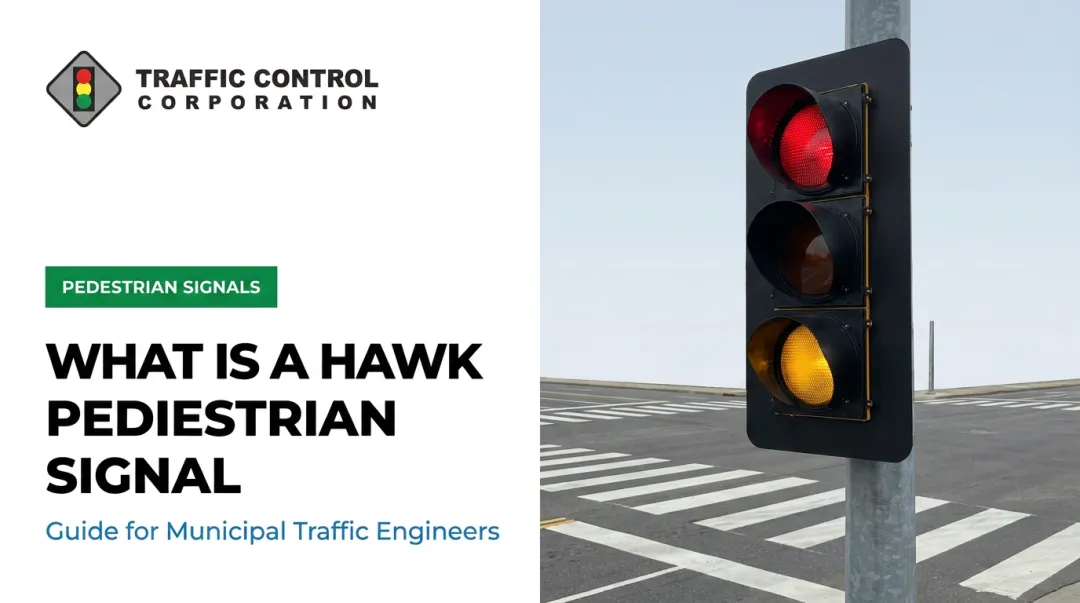
A related but distinct device is the pedestrian hybrid beacon, or HAWK beacon, used at uncontrolled crossings that don't warrant a full traffic signal. It uses its own housing design: a vehicle-facing face with two red sections above one yellow section, following a dark-flash-yellow-steady-yellow-steady-red sequence defined in MUTCD Sections 4J.02-4J.03.
Despite the shared purpose of protecting equipment that serves pedestrian safety, a HAWK beacon housing is a different device from a standard pedestrian signal housing.
How Pedestrian Signal Housings Work
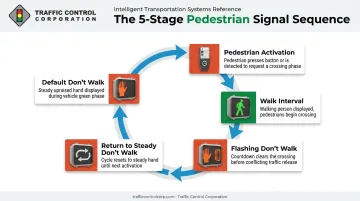
A pedestrian signal follows a predictable sequence, and understanding it explains why the housing matters at every step.
- Default "Don't Walk" - the steady upraised-hand symbol displays, telling pedestrians to wait
- Pedestrian activation - a push button, or in some installations passive detection, sends a call to the controller
- Walk interval - the controller initiates the walking-person symbol once vehicle phasing allows it
- Flashing "Don't Walk" - a countdown or flashing upraised-hand warns pedestrians already in the crosswalk to finish crossing
- Return to steady "Don't Walk" - the cycle resets
None of this works if the housing fails. The enclosure physically protects the LED modules, wiring, and terminal connections from weather, vibration, and vandalism attempts, so the sequence displays reliably regardless of conditions outside.
A cracked lens, corroded terminal, or water-soaked wiring harness can knock out the display entirely. That's exactly the failure mode agencies want to avoid at a busy crosswalk.
Countdown Timers and Crash Reduction
MUTCD Section 4I.04 requires a countdown display whenever the pedestrian change interval exceeds 7 seconds, showing pedestrians exactly how much time remains to finish crossing. This isn't just a convenience feature.
FHWA's before-after analysis of 115 intersections in Charlotte and 218 in Philadelphia found that countdown displays were associated with an 8 percent reduction in total crashes and a 9 percent reduction in pedestrian crashes. The estimated benefit-cost ratio reached 23, a meaningful return provided the housing keeps the display legible and functional.
Accessible Pedestrian Signals (APS)
Housings that integrate accessible pedestrian signals add audible tones and vibrotactile arrows so pedestrians with visual impairments can cross safely. Federal accessibility guidelines specify a locator tone no longer than 0.15 seconds, repeating once per second, along with vibrotactile indications during the walk interval.
These accessibility features fail the moment the housing does. A water-damaged push button or a corroded speaker connection defeats the entire system, regardless of how well the electronics were designed.
Types and Materials of Pedestrian Signal Housings
Common Housing Materials
Pedestrian signal housings typically come in one of two shell materials:
| Material | Characteristics | Best suited for |
|---|---|---|
| Polycarbonate | Lightweight, cost-effective, UV- and heat-stabilized resin | High-volume deployments, standard exposure |
| Aluminum | Die-cast, powder-coated finish, more rigid | Higher-traffic or vandalism-prone locations |
Stainless steel shows up less often as a full housing shell and more commonly as hardware - hinge pins, screws, and latches - even on polycarbonate or aluminum housings. TCC's Econolite-sourced 16-inch polycarbonate housing, for instance, pairs stainless steel hardware with a molded-in color finish designed to reduce long-term maintenance.
Housing Configurations
Beyond material, housings come in a few standard configurations:
- Standard pole-mounted rectangular housings - the most common setup at signalized intersections
- Pedestal-mounted housings - standalone units for crosswalks without a full signal pole
- HAWK beacon-paired housings - built for pedestrian hybrid beacon installations at uncontrolled intersections
Protective Features Worth Specifying
When comparing housings, look for:
- Enclosure ratings - NEMA Type 4X protects against windblown dust, rain, and corrosion. NEMA and IP ratings aren't interchangeable, so confirm the exact rating on each product
- Anti-vandal features - lockable access panels and tool-free latches that still resist tampering
- UV-stable finishes - matter most for polycarbonate housings exposed to years of direct sun
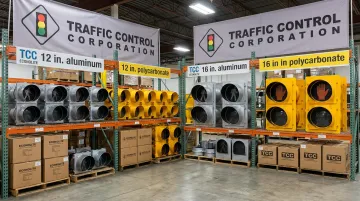
Sizing matters too. Econolite's lineup, distributed through TCC, includes 12-inch and 16-inch housings in both aluminum and polycarbonate, giving agencies flexibility to match housing size to sight-distance requirements at each crossing.
Why Housing Quality and Standards Compliance Matter
MUTCD and ADA Compliance Requirements
The MUTCD's requirements extend beyond signal sequencing to include physical specifications for housings. Section 4I.03 requires the bottom of the pedestrian signal housing, including brackets, to sit between 7 and 10 feet above the sidewalk, balancing visibility against clearance safety. Pedestrian hybrid beacons carry their own sequencing rules under Sections 4J.02-4J.03, reinforcing that federal standards treat these as engineered systems with strict design requirements.
Accessibility standards carry equal weight. Housings supporting accessible pedestrian signals must remain fully functional to meet ADA accessibility mandates. The Public Rights-of-Way Accessibility Guidelines specify locator tones, tactile arrows, and vibrotactile walk indications as technical requirements, not optional add-ons. If a housing's audible device fails because water got into a connector, that's an accessibility compliance failure demanding immediate correction, not a routine maintenance ticket.
The Case for Well-Engineered Housings
Pedestrian hybrid beacons illustrate what's at stake when pedestrian infrastructure works as designed. FHWA research found that PHB installations produced 69 percent fewer pedestrian crashes and 29 percent fewer total crashes at treated locations. Those results depend on the entire system functioning, including a housing that protects the signal face from the elements.
Poor-quality or failing housings create real consequences:
- Exposed wiring: creates electrical hazards for maintenance crews and the public
- Water intrusion: causes intermittent outages that are hard to diagnose and expensive to chase down
- Vandalism: disables accessibility features exactly when pedestrians with visual impairments need them most
Agencies that specify weather- and tamper-resistant housings upfront generally spend less on emergency repairs and carry less liability exposure than those chasing the lowest bid on non-compliant alternatives. Pay a bit more for a compliant housing now, or pay for truck rolls, outage complaints, and potential ADA findings later.
Choosing and Sourcing the Right Pedestrian Signal Housing
Specifying the right pedestrian signal housing starts with a handful of site-specific questions:
- Traffic volume - higher-volume crossings often justify larger 16-inch housings for visibility
- Climate and weather exposure - Midwest freeze-thaw cycles and road salt argue for corrosion-resistant materials
- ADA/APS requirements - confirm mounting provisions for audible and tactile devices before ordering, not after
- Vandalism risk - urban or high-foot-traffic areas may call for aluminum housings over polycarbonate
Getting these specifications right the first time avoids costly retrofits down the road.
Why Sourcing Relationships Matter
Housing specification rarely happens in isolation. It has to work with the existing controller, cabinet, and whatever APS devices an agency has already standardized on. That's where an established distributor earns its keep.
Traffic Control Corporation has served Midwest transportation agencies for over 75 years, distributing pedestrian signal housings from Econolite in 12-inch and 16-inch, aluminum and polycarbonate configurations.
TCC also carries pedestrian-safety-specific products through PedSafety, including the Guardian APS and networked WiAAPS systems. That means a housing spec and its accessible pedestrian signal components can be sourced and confirmed compatible in the same conversation.
With relationships across 40+ manufacturers, TCC's technical teams help agencies and contractors:
- Match housing material and size to intersection conditions
- Confirm APS mounting compatibility before a bid goes out
- Troubleshoot onsite when integration questions come up during installation
Bringing in experienced technical support early in the specification process, rather than after equipment arrives, is what prevents mismatched components from delaying a project.
Frequently Asked Questions
What is the difference between a pedestrian signal housing and a pedestrian hybrid beacon (HAWK)?
A pedestrian signal housing is the protective enclosure for standard Walk/Don't Walk indications. A HAWK beacon is a distinct device with its own housing and vehicle-facing signal sequence, used where a full traffic signal isn't warranted.
What materials are pedestrian signal housings typically made from?
Polycarbonate and aluminum are the two common shell materials, balancing cost, weight, and durability differently. Stainless steel usually appears as hardware rather than a full housing shell.
Are pedestrian signal housings required to meet ADA standards?
Yes, housings supporting accessible pedestrian signals, including audible tones and tactile arrows, must remain fully functional to meet ADA and PROWAG accessibility requirements.
How long do pedestrian signal housings typically last?
Lifespan varies by material and environmental exposure. Well-maintained, properly rated housings generally outlast lower-quality alternatives, though manufacturers don't publish a single universal figure.
Who is responsible for installing and maintaining pedestrian signal housings?
Municipal transportation departments and contractors typically handle installation and maintenance, often with support from distributors like TCC for product training, troubleshooting, and factory-trained field service.
What is inside a pedestrian signal housing?
The signal indication module, wiring and terminal connections, APS push buttons or audible devices, and sometimes backup power connections all sit inside the enclosure.