
Lens terminology trips up a lot of buyers. Focal length, aperture, iris type, mount format — these terms get thrown around in spec sheets without much explanation. This guide breaks each one down in plain language, so you know exactly what you're buying and why it matters.
For agencies and contractors specifying camera systems for intersections, traffic corridors, or public infrastructure, lens choice carries the same weight as camera selection. TCC's technical team helps match the right lens and camera combination for ITS and public safety applications across the Midwest.
Key Takeaways
- Fixed lenses cost less for stationary scenes; varifocal lenses adjust on-site for flexibility.
- Shorter focal lengths (mm) widen the field of view; longer ones zoom in for narrower coverage.
- A 2.8mm lens covers wide areas; 4mm and up favor identification detail.
- Aperture, iris type, and sensor format must match the camera body for sharp results.
- The right lens depends on your surveillance goal: area size, distance, and lighting.
Types of CCTV Camera Lenses
CCTV lenses fall into categories based on one key question: is the focal length adjustable or fixed? That distinction shapes almost every other decision you'll make.
Fixed vs. Varifocal Lenses
Fixed (mono-focal) lenses have one permanent focal length and one field of view. They're the most affordable option and work well for scenes that never change — a hallway, a single entrance, a loading dock.
Varifocal lenses let installers adjust the focal length during setup, zooming in or out to frame the shot correctly. Axis notes that varifocal lenses are adjustable but typically require refocusing after each adjustment — unlike true zoom lenses, which hold focus automatically as the focal length changes.
| Lens Type | Cost | Flexibility | Best For |
|---|---|---|---|
| Fixed | Lower | None — set once | Scenes that never change |
| Varifocal | Higher | Adjustable on-site | Scenes needing overview and detail |
Wide-Angle vs. Telephoto Lenses
Wide-angle lenses use a short focal length (2.8mm is common) to capture broad areas. You get more scene coverage but less detail per object — a solid choice for parking lots, warehouses, or open yards.
Telephoto lenses use a longer focal length to bring distant subjects closer, sacrificing field of view for detail. These fit entry gates, license plate capture points, or any fixed spot you need to monitor from a distance.
C-Mount vs. CS-Mount
This is where a lot of avoidable installation errors happen. C-mount and CS-mount lenses look nearly identical but sit at different distances from the camera's imaging sensor.
| Mount Type | Flange Focal Distance | Compatibility Note |
|---|---|---|
| C-mount | 17.526mm (rounded to 17.5mm) | Needs a 5mm adapter ring to work on a CS-mount camera |
| CS-mount | 12.526mm (rounded to 12.5mm) | Cannot achieve correct focus on an unmodified C-mount body |
Mismatch the two and the camera simply won't focus, no matter how good the lens is. It's a common but avoidable error, and one that TCC's factory-trained technicians help customers prevent during installation and product selection.
Understanding Focal Length and Field of View
Focal length is measured from the center of the lens to the imaging sensor, in millimeters. Shorter focal lengths widen the field of view but reduce per-object detail. Longer focal lengths narrow the view while zooming in on detail.
Focal length doesn't translate to a universal angle. A 2.8mm lens on one manufacturer's camera can produce a different field of view than a 2.8mm lens on another, depending on sensor size and lens design. Pelco's Sarix Value 2 dome lists a 2.8mm fixed lens at 104 degrees horizontal, while other manufacturers list comparable 2.8mm lenses several degrees narrower.
Always check the specific camera's datasheet, not a generic chart.
Common Lens Sizes and What They're Used For
- 2.8mm: roughly 90–110° field of view. Covers a full room, small retail space, or wide outdoor area with one camera.
- 4mm: roughly 60–80° field of view. Better for detection and identification in parking areas or aisles.
- 6mm–8mm: narrower, more telephoto view. Common for doorways, corridors, or vehicle entrance points.
- 12mm and above: significantly narrower FOV built for long-distance monitoring — license plate capture, perimeter fencing, highway or intersection surveillance.
2.8mm vs. 4mm: Which Lens Is Better?
Neither one is "better" in absolute terms. A 2.8mm lens gives you a wider view suited to general area coverage. A 4mm lens narrows that view but adds a bit more reach and detail on individual subjects.
The right pick depends on your priority:
- Need to see everything happening across a room or yard? Go with 2.8mm.
- Need to identify faces or activity at moderate range? Go with 4mm.
- Not sure which fits your layout? Test both lenses on a sample camera before finalizing your order.
Key CCTV Lens Specifications to Consider
Focal length gets most of the attention, but several other specs determine whether your footage is actually usable.
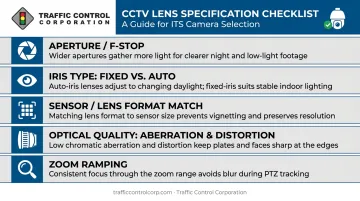
Aperture and F-stop. The F-stop number controls how much light reaches the sensor. Lower F-numbers mean a larger aperture opening and better low-light performance, which is critical for any camera running 24/7 outdoors.
Iris type. Fixed or manual iris lenses work fine in consistent indoor lighting. Auto-iris lenses automatically adjust for changing outdoor light, which matters for anything facing sunrise-to-sunset exposure swings.
Sensor and lens format matching. Lens format size (1/3", 1/2", and so on) must equal or exceed the camera's sensor format. According to Axis's white paper on lenses in surveillance, an undersized lens image circle produces visible black corners on the frame: a mismatch that ruins otherwise good footage.
Optical quality factors. Chromatic aberration, geometric distortion, and IR-corrected optics all affect sharpness. Higher-quality glass elements reduce color fringing, especially near the edges of the image, which matters for cameras relying on IR illumination at night.
Zoom lens "ramping." Motorized zoom lenses often lose light-gathering capability at full zoom. One Fujinon 60x lens shifts from F3.1 at wide angle to F5.2 at full telephoto — a meaningful drop worth factoring into any PTZ camera spec for wide-area applications.
How to Choose the Right Lens for Your Surveillance Application
Start with the operational requirement: what do you need to identify — a face, a license plate, general activity — and from what distance? That answer determines your ideal focal length range before you look at anything else.
Next, factor in the installation environment:
- Indoor, consistent lighting — a manual iris lens works fine and costs less.
- Outdoor or variable light — an auto-iris lens is close to mandatory.
- Wide-area public infrastructure (intersections, highway corridors, municipal facilities) where varifocal or motorized zoom lenses paired with the right housing typically win out.
For agencies specifying camera systems at that complex tier, TCC's team represents over 40 manufacturers, including Pelco, and provides product selection assistance and onsite troubleshooting across the Midwest. This support matters most when legacy cabinets or existing pole hardware limit what will physically integrate — a scenario TCC's engineers see regularly during pre-purchase consultations.
Before you buy, talk to a distributor or technician who knows the equipment. A mismatched mount, an undersized sensor format, or an underpowered aperture won't show up until after installation, and by then, it's a return trip up the pole to fix.
CCTV Lens Cost and Maintenance Considerations
Lens pricing scales with adjustability and optical quality. Publicly listed examples give a sense of the range, though prices shift over time and by retailer:
- Basic fixed lens (8mm, C-mount): around $125–$140
- Basic varifocal (2.8–10mm): around $100
- Mid-range varifocal (12.5–50mm): roughly $210
- Motorized zoom lens: $800 and up
- Long-range 60x motorized zoom (16.7–1000mm): can exceed $20,000
These figures come from B&H Photo's CCTV lens listings and reflect individual product examples, not fixed market averages. Compare quotes based on matching focal range, format, and iris control before selecting a lens for detection or monitoring work.
Price is only half the story. Routine care determines whether that lens keeps delivering usable footage for years.
Cleaning and Inspection Basics
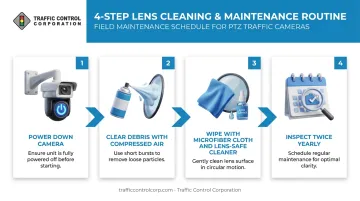
- Power down the camera before touching the lens.
- Use compressed air first to clear loose debris.
- Wipe gently with a microfiber cloth and lens-safe cleaner — never household glass cleaner, which can damage coatings.
- Inspect lenses twice yearly to catch dust, condensation, or weather damage before it degrades image quality.
Dirty optics don't always trigger an obvious outage. They just quietly reduce image clarity until someone notices footage isn't good enough to identify a plate or a face. Routine inspection catches this before it becomes a problem during an actual incident review.
Frequently Asked Questions
What type of lens is used in CCTV cameras?
CCTV cameras typically use fixed (mono-focal) or varifocal lenses, available in wide-angle and telephoto variants depending on coverage area and identification needs.
What is the cost of a CCTV camera lens?
Pricing varies widely by lens type and quality. Basic fixed lenses are the most affordable, while motorized varifocal or zoom lenses cost more due to added mechanics and optics.
What does CCTV actually stand for?
CCTV stands for Closed-Circuit Television, a system where video is transmitted to a limited set of monitors or recorders rather than broadcast publicly.
Which is better, 2.8 or 4mm CCTV lens?
Neither is universally better. A 2.8mm lens suits wide-area general coverage, while a 4mm lens offers a narrower view with slightly more detail and reach.
What is the difference between a fixed and varifocal lens?
Fixed lenses have one permanent focal length and cost less. Varifocal lenses allow on-site focal length adjustment, giving installers more flexibility to frame the shot.
How do I know if a lens is compatible with my camera?
Match the mount type (C vs. CS) and confirm the lens format size equals or exceeds the camera's sensor size. Mismatches on either front cause focus failure or vignetting.