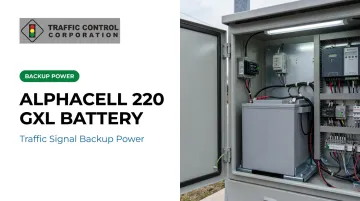
That's the gap the AlphaCell 220 GXL fills. Manufactured by Alpha Technologies, this sealed VRLA battery shows up regularly in the UPS systems protecting traffic signals, ITS field devices, and communications shelters when utility power drops.
This guide breaks down what the AlphaCell 220 GXL actually is, its verified specifications, where it fits into traffic control systems, how to maintain it, and where Midwest agencies and contractors can source one.
Key Takeaways
- Sealed, valve-regulated gel battery for UPS backup in traffic and ITS cabinets
- Designed for maintenance-free operation in outdoor, temperature-variable environments
- Rated 109-110 Ah at the 20-hour discharge rate; "220" isn't an amp-hour figure
- Periodic testing and timely replacement prevent unplanned signal downtime
- TCC supplies and supports Alpha Technologies' AlphaCell lineup across its 11-state Midwest territory
What Is the AlphaCell 220 GXL Battery?
The AlphaCell 220 GXL is a sealed, valve-regulated lead-acid (VRLA) battery built by Alpha Technologies for standby and UPS power applications. It belongs to Alpha's GXL GelCell family, not Alpha's AGM lineup.
According to Alpha's official 220 GXL datasheet, the unit "incorporates gel for thermal dissipation," making it a gel-electrolyte VRLA battery rather than an absorbed glass mat design. Both chemistries are sealed and maintenance-free, but they're not the same thing, so it matters when you're specifying a like-for-like replacement.
What "GXL" signifies: Alpha positions the GXL series as its long-life, high-performance gel battery line, built with a silver alloy grid for extended service in demanding outdoor environments. Alpha doesn't publish a formal expansion of the acronym, but the series is consistently marketed for extended runtime in tough field conditions.
What "220" refers to: This is where a lot of confusion happens, since the number doesn't correspond directly to amp-hour capacity.
The battery's actual published capacity is 109 Ah (to 1.75V per cell) or 110 Ah (to 1.70V per cell) at the 20-hour rate. Always confirm capacity against the current datasheet before specifying it in a bid or procurement document.
Primary purpose: Alpha lists broadband, traffic, and Wi-Fi as the named applications for this battery, positioning it squarely for outdoor standby power in traffic cabinets, ITS field equipment, and telecom shelters.
Key Features & Benefits
The sealed, valve-regulated design brings several practical advantages to roadside cabinets:
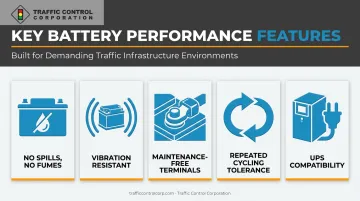
- No spills, no fumes. Sealed construction means no acid venting or spill risk inside an enclosed cabinet
- Vibration resistant. Built to hold up in pole-mounted or roadside enclosures exposed to traffic vibration
- Maintenance-free terminals. A 1/4-20 UNC threaded insert terminal means no periodic retorquing
- Repeated cycling tolerance. Designed for the frequent charge/discharge patterns typical of standby power systems
- UPS compatibility. Built to pair with Alpha Technologies UPS platforms commonly deployed in traffic control cabinets
Technical Specifications
Here's what Alpha's datasheet confirms for the 220 GXL:
| Specification | Value |
|---|---|
| Nominal voltage | 12.8 V per unit |
| Capacity | 109 Ah (1.75V cutoff) / 110 Ah (1.70V cutoff) at 20-hr rate |
| Dimensions | 8.48" H x 13.42" W x 6.80" D (215.4 x 340.9 x 172.7 mm) |
| Weight | 73 lb (33.2 kg) |
| Terminal | Maintenance-free 1/4-20 UNC threaded insert |
| Recommended float voltage | 13.5-13.8 Vdc |
| Discharge temperature | -40°F to 160°F (-40°C to 71°C) |
| Charge temperature | -9.4°F to 140°F (-23°C to 60°C), with temperature compensation |
Alpha's design-life entry on the datasheet reads simply "Extended," without a specific year rating. That differs from a warranty period: Alpha backs the 220 GXL with four- to five-year warranties, but a warranty term isn't the same as a numerical design-life rating, and the datasheet doesn't publish one.
Charging and Placement Considerations
Float voltage matters more than people realize. Running outside the 13.5-13.8 Vdc range for extended periods shortens battery life significantly, whether from undercharging or overcharging. Pair the 220 GXL only with chargers rated for this range.
Temperature placement matters too. The wide discharge range (-40°C to 71°C) gives flexibility for exposed cabinet locations, but charge temperature is narrower, so cabinets in extreme heat zones need charging systems with temperature compensation built in.
How It Compares to Other Chemistries
Traffic agencies weighing backup battery chemistries for cabinet UPS systems generally compare three options. A federal traffic signal backup power study breaks down the tradeoffs:
| Chemistry | Cycles to 80% Capacity | Maintenance |
|---|---|---|
| Lead-acid | 200-300 | Every 3-6 months |
| Lithium-ion | 500-1,000 | None required |
| Sealed gel VRLA (220 GXL) | Not published in the study | None required |
Gel VRLA sits in a middle ground: no maintenance burden like lead-acid, but published cost and cycle-life figures specific to this chemistry weren't available in the comparison.
On certifications: Alpha's 2009 datasheet doesn't list a specific UL standard or file number for the 220 GXL. A later Alpha catalog marks "Agency Compliance: Y" without naming the standard or listing status. Confirm current certification status directly with Alpha before specifying this battery in a project that requires documented UL compliance.
Applications & Use Cases in Traffic Control Systems
The 220 GXL's core job is straightforward: keep the cabinet running when utility power doesn't.
Common applications include:
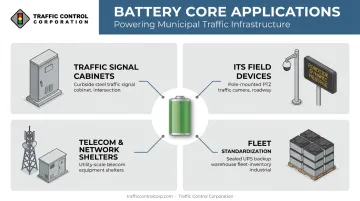
- Traffic signal cabinets. UPS systems built around this battery keep intersections operational during outages, preventing the "all-way stop" scenario when signals go dark.
- ITS field devices. Dynamic message signs, CCTV cameras, and traffic sensors depend on continuous power, especially when storms knock out feeds and agencies need that data most.
- Telecom and network shelters. Communications infrastructure supporting traffic management needs the same reliable standby power; Alpha lists broadband applications alongside traffic on its datasheet.
- Standardization pays off. Agencies managing hundreds of cabinets across a region benefit from settling on one proven battery platform, simplifying inventory, training, and replacement logistics compared to juggling multiple types across a fleet.
Why Backup Power Isn't Optional
The stakes here aren't abstract. During a 2002 ice storm, roughly 70 traffic signals lost power in Overland Park, Kansas, and the city engineer estimated that 15 accidents resulted, according to a federal traffic signal energy backup study.
The same report noted a comparable battery-backup-plus-generator installation cost around $30,000, while the city valued a single injury accident at $44,900 in 2005 dollars.
The math makes the case on its own. One prevented accident can offset the cost of an entire backup power installation.
Maintenance, Lifespan & Replacement Tips
The AlphaCell 220 GXL and other sealed VRLA batteries don't need watering or acid checks, but "maintenance-free" doesn't mean "check-free."
Test regularly. Periodic voltage and load testing confirms actual capacity retention rather than assuming the battery is fine because it hasn't failed yet. A battery can read normal voltage under no load and still fail under real demand.
Watch for these warning signs:
- Noticeably reduced runtime during outages compared to prior tests
- Physical swelling or case deformation
- Inconsistent or drifting voltage readings across test cycles
- Longer-than-expected recharge times after discharge events
Storage and disposal:
- Store spare batteries in a cool, dry location on float charge, topping off periodically to avoid deep discharge
- Avoid letting batteries sit fully discharged for extended periods, which shortens usable life
- Lead-acid batteries, including gel VRLA units, must be recycled through certified lead-acid battery recycling channels in line with state and federal environmental regulations, not disposed of in general waste
TCC's factory-trained field technicians can perform on-site load testing and source certified AlphaCell replacement units when a battery falls below spec.
Why Source Your AlphaCell 220 GXL Battery from TCC
Traffic Control Corporation has been a Midwest distributor of traffic control equipment since 1946, and Alpha Technologies is one of the 40-plus manufacturers TCC represents today.
What that means for agencies and contractors:
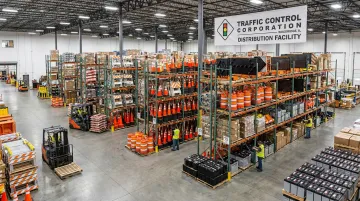
- Deep regional inventory. TCC maintains a multi-million dollar inventory at its Woodridge, Illinois facility, supporting fast availability across its entire 11-state Midwest territory
- Factory-trained field support. TCC's technical field service team performs cabinet audits and health checks that explicitly cover UPS and battery condition, plus onsite troubleshooting when a cabinet malfunctions
- Product guidance before you buy. TCC's product selection and application assistance helps confirm battery and UPS compatibility before it goes into a project spec
If your agency is planning a cabinet refresh, standardizing backup power across a signal network, or just needs a straight answer on availability and compatibility, contact TCC or call 630-543-1300. Their team can confirm current stock and help match the right AlphaCell configuration to your UPS setup.
Frequently Asked Questions
What is an AlphaCell battery?
AlphaCell is Alpha Technologies' line of sealed VRLA batteries designed for backup power in UPS applications, including traffic signal cabinets, ITS field equipment, and telecom shelters.
What does "GXL" mean in AlphaCell 220 GXL?
GXL refers to Alpha's long-life, high-performance gel battery series within the AlphaCell lineup, built with a silver alloy grid for extended service life in demanding outdoor conditions.
How long does an AlphaCell 220 GXL battery typically last?
Alpha's datasheet lists design life only as "Extended" without a specific year figure, and backs the unit with four- to five-year warranties. Actual lifespan depends heavily on charging practices and temperature exposure.
Can the AlphaCell 220 GXL be used with any UPS system?
It's built to pair with Alpha Technologies UPS platforms commonly used in traffic cabinets. Confirm voltage and charging compatibility before pairing it with a UPS from a different manufacturer.
How do I know when to replace my AlphaCell 220 GXL battery?
Watch for reduced runtime during outages, physical swelling, inconsistent voltage readings, and longer recharge times. Any of these signals it's time for load testing or replacement.
Where can I purchase AlphaCell 220 GXL batteries for traffic control applications?
TCC distributes Alpha Technologies' AlphaCell lineup across its 11-state Midwest territory, with inventory in Woodridge, Illinois, and technical support to confirm availability and compatibility.